
Whey Protein Ingredients Market Size, Share and Trends 2026 to 2035
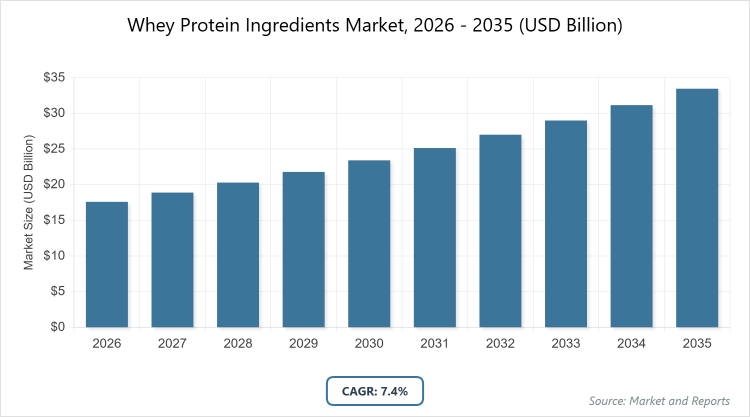
According to MarketnReports, the global Whey Protein Ingredients Market size was estimated at USD 17.6 billion in 2025 and is expected to reach USD 35.9 billion by 2035, growing at a CAGR of 7.4% from 2026 to 2035. Whey Protein Ingredients Market is driven by rising demand in sports nutrition and health supplements.What are the Key Insights of the Whey Protein Ingredients Market?
- The global Whey Protein Ingredients Market was valued at USD 17.6 billion in 2025 and is projected to reach USD 35.9 billion by 2035.
- The market is expected to grow at a CAGR of 7.4% during the forecast period from 2026 to 2035.
- The market is driven by increasing health consciousness and demand for protein-enriched products in sports and clinical nutrition.
- In the Type segment, Whey Protein Isolate dominates with a 42.7% share due to its high purity and low lactose content, making it ideal for lactose-intolerant consumers and premium supplements.
- In the Application segment, Sports Nutrition dominates with a 38.9% share because of its role in muscle recovery and performance enhancement, appealing to fitness enthusiasts.
- In the End-User segment, Supplement Companies dominates with a 40% share owing to the rising popularity of dietary supplements for wellness and bodybuilding.
- North America dominates the regional landscape with a 35% share, attributed to advanced dairy infrastructure, high consumer awareness of health benefits, and strong presence of key manufacturers.
What is the Industry Overview of the Whey Protein Ingredients Market?
The Whey Protein Ingredients Market comprises the production, processing, and distribution of protein-rich derivatives obtained from whey, a byproduct of cheese manufacturing, which are utilized for their high bioavailability, amino acid profile, and functional properties in various applications. It includes forms such as concentrates, isolates, and hydrolysates that enhance nutritional value, texture, and shelf life in products. Market definition refers to the sector focused on extracting and refining whey proteins for use in food, beverages, supplements, and other industries, driven by consumer preferences for high-protein diets, functional foods, and clean-label ingredients while addressing sustainability in dairy processing.
What are the Market Dynamics of the Whey Protein Ingredients Market?
Growth Drivers
The Whey Protein Ingredients Market is driven by escalating consumer awareness of health and wellness, leading to heightened demand for protein-rich diets that support muscle building, weight management, and immune function. Advancements in processing technologies enable the production of high-quality, bioavailable proteins with improved solubility and flavor profiles, expanding applications in functional foods and beverages. Additionally, the growing fitness industry and aging population seeking nutritional support for sarcopenia further propel market growth, as whey proteins offer essential amino acids like leucine for protein synthesis, fostering innovation and market expansion globally.
Restraints
Restraints in the Whey Protein Ingredients Market include fluctuating raw material prices due to dairy market volatility and supply chain disruptions from environmental factors like droughts affecting milk production. Allergenic concerns and lactose intolerance limit adoption among certain demographics, while competition from plant-based alternatives erodes market share in vegan and sustainable segments. Regulatory hurdles on labeling and quality standards also increase compliance costs, potentially slowing innovation and entry for smaller players in a consolidated industry.
Opportunities
Opportunities in the Whey Protein Ingredients Market arise from the surge in demand for clean-label and organic variants, as consumers prioritize natural sourcing and transparency in ingredients. Expansion into emerging markets with rising disposable incomes offers potential for fortified products in infant and elderly nutrition. Innovations in bioactive peptides and personalized nutrition, combined with e-commerce growth, enable targeted marketing and new formulations, while sustainable practices like upcycling whey byproducts attract eco-conscious buyers and open avenues for premium pricing.
Challenges
Challenges in the Whey Protein Ingredients Market involve environmental sustainability issues, as whey production generates wastewater and requires energy-intensive processing, prompting scrutiny from regulators and consumers. Intense competition from alternative proteins like pea and soy demands continuous R&D for differentiation. Supply chain complexities, including dependency on dairy farming cycles, pose risks of shortages, while evolving consumer preferences for allergen-free options necessitate reformulations, increasing costs and time to market.
Whey Protein Ingredients Market: Report Scope
| Report Attributes | Report Details |
| Report Name | Whey Protein Ingredients Market |
| Market Size 2025 | USD 17.6 Billion |
| Market Forecast 2035 | USD 35.9 Billion |
| Growth Rate | CAGR of 7.4% |
| Report Pages | 220 |
| Key Companies Covered |
Glanbia plc, Hilmar Cheese Company, Fonterra Co-operative Group Ltd, Saputo Inc, Arla Foods, Agropur, FrieslandCampina, and Others. |
| Segments Covered | By Type, By Application, By End-User, and By Region. |
| Regions Covered | North America, Europe, Asia Pacific (APAC), Latin America, and The Middle East and Africa (MEA) |
| Base Year | 2025 |
| Historical Year | 2020 - 2024 |
| Forecast Year | 2026 - 2035 |
| Customization Scope | Avail customized purchase options to meet your exact research needs. |
What is the Market Segmentation of the Whey Protein Ingredients Market?
The Whey Protein Ingredients Market is segmented by type, application, end-user, and region.By Type Segment, Whey Protein Isolate emerges as the most dominant subsegment, followed by Whey Protein Concentrate as the second most dominant. Whey Protein Isolate leads due to its superior protein content exceeding 90% and minimal fats/carbs, driving market growth by catering to high-end sports nutrition and medical applications where purity is paramount; this dominance is fueled by technological advancements in membrane filtration that enhance yield and bioavailability, supporting premium pricing and consumer loyalty in health-focused segments.
By Application Segment, Sports Nutrition is the most dominant subsegment, with Food and Beverages as the second most dominant. Sports Nutrition dominates as it leverages whey's rapid absorption for post-workout recovery, propelling the market through increased gym culture and athletic endorsements; its prevalence stems from versatile formulations in shakes and bars, boosting overall consumption and innovation in flavor-enhanced products.
By End-User Segment, Supplement Companies is the most dominant subsegment, followed by Food Manufacturers as the second most dominant. Supplement Companies lead owing to the boom in wellness supplements, fueling market expansion via targeted products for fitness and dieting; this is driven by direct-to-consumer sales channels and branding that emphasize whey's efficacy in muscle gain and satiety.
What are the Recent Developments in the Whey Protein Ingredients Market?
- In August 2025, Glanbia Nutritionals launched a new line of bioactive whey protein isolates enriched with peptides for enhanced immune support, targeting the growing demand in functional foods amid post-pandemic health trends.
- In June 2025, Fonterra Co-operative Group announced a partnership with a biotech firm to develop sustainable whey protein hydrolysates using precision fermentation, reducing environmental impact and appealing to eco-conscious consumers.
- In April 2025, Arla Foods expanded its production capacity in North America with a new facility focused on organic whey protein concentrates, aiming to capture the rising organic segment in sports and infant nutrition.
What is the Regional Analysis of the Whey Protein Ingredients Market?
North America to dominate the global market.North America holds the leading position in the Whey Protein Ingredients Market, supported by robust dairy infrastructure and high consumer spending on health products. The United States dominates within the region, driven by widespread fitness culture, innovative supplement brands, and regulatory support for functional claims, resulting in extensive use in sports nutrition and dietary aids.
Europe follows with steady growth, emphasizing quality and sustainability in dairy derivatives. Denmark leads the region, leveraging its strong cheese production heritage and export-oriented whey processing, with companies like Arla Foods advancing clean-label innovations for bakery and beverages amid EU health regulations.
Asia-Pacific is the fastest-growing region, fueled by urbanization and rising protein awareness. China dominates, with increasing imports of whey for infant formula and sports supplements, supported by government initiatives for nutritional security and a burgeoning middle class seeking Western-style wellness products.
Latin America exhibits emerging potential through dairy sector investments. Brazil leads, utilizing whey in functional foods and animal feed, driven by agricultural growth and consumer shifts toward protein-enriched diets for weight management.
The Middle East and Africa region is nascent but expanding, with focus on nutritional fortification. South Africa dominates, importing whey for supplements and dairy products, aided by health campaigns addressing malnutrition and growing urban fitness trends.
What are the Key Market Players and Strategies in the Whey Protein Ingredients Market?
Glanbia plc focuses on innovation in bioactive proteins and sustainable sourcing, leveraging acquisitions to expand its portfolio in sports and clinical nutrition.
Hilmar Cheese Company emphasizes high-purity isolates through advanced filtration, targeting premium markets with customized solutions for food manufacturers.
Fonterra Co-operative Group Ltd pursues global partnerships for whey upcycling, prioritizing eco-friendly production to meet demand in infant and functional foods.
Saputo Inc. invests in capacity expansion and R&D for hydrolysates, aiming at allergen-reduced products for diverse end-users.
Arla Foods adopts clean-label strategies with organic certifications, focusing on European exports and collaborations for bakery applications.
Agropur leverages cooperative models for cost efficiency, developing value-added whey for animal feed and pharmaceuticals.
FrieslandCampina integrates digital traceability in supply chains, offering specialized concentrates for Asian markets in dairy and supplements.
What are the Market Trends in the Whey Protein Ingredients Market?
- Increasing demand for bioactive whey fractions like lactoferrin for immune health.
- Shift toward organic and grass-fed whey proteins for clean-label appeal.
- Growth in plant-dairy hybrid formulations to attract vegan-leaning consumers.
- Expansion of whey in elderly nutrition for muscle maintenance.
- Adoption of sustainable processing to reduce wastewater.
- Rise in personalized nutrition with whey-based apps and formulations.
- Integration in functional beverages for on-the-go consumption.
- Focus on low-lactose variants for broader accessibility.
- Partnerships with fitness influencers for marketing.
- Emphasis on traceability through blockchain in supply chains.
What Market Segments and their Subsegments are Covered in the Whey Protein Ingredients Market Report?
By Type- Whey Protein Concentrate
- Whey Protein Isolate
- Whey Protein Hydrolysate
- Demineralized Whey Protein
- Sweet Whey Powder
- Acid Whey Powder
- Bioactive Whey Protein
- Lactoferrin
- Lactoperoxidase
- Glycomacropeptide
- Others
- Sports Nutrition
- Food and Beverages
- Infant Nutrition
- Bakery and Confectionery
- Dairy Products
- Personal Care
- Animal Feed
- Pharmaceuticals
- Dietary Supplements
- Functional Foods
- Others
- Food Manufacturers
- Supplement Companies
- Pharmaceutical Companies
- Animal Feed Producers
- Cosmetics Industry
- Sports and Fitness Enthusiasts
- Hospitals and Clinics
- Retail Consumers
- Infant Formula Producers
- Bakeries
- Others
By Region
- North America
- U.S.
- Canada
- Europe
- UK
- Germany
- France
- Rest of Europe
- Asia Pacific
- China
- India
- Japan
- Rest of Asia Pacific
- Latin America
- Brazil
- Mexico
- Rest of Latin America
- Middle East & Africa
- UAE
- South Africa
- Rest of Middle East & Africa
Frequently Asked Questions
The Whey Protein Ingredients Market involves the extraction and refinement of proteins from whey for use in nutrition, food, and other sectors.
Key factors include health trends, sports nutrition demand, technological advancements, and sustainability initiatives.
The market is projected to grow from approximately USD 17.6 billion in 2026 to USD 35.9 billion by 2035.
The CAGR is expected to be 7.4% during the forecast period.
North America will contribute notably, holding around 35% of the market share due to strong dairy and health sectors.
Major players include Glanbia plc, Hilmar Cheese Company, Fonterra Co-operative Group Ltd, and Saputo Inc.
The report provides analysis of size, trends, segments, regions, players, drivers, restraints, and forecasts.
Stages include dairy sourcing, whey separation, processing, formulation, distribution, and end-use application.
Trends shift toward sustainable, bioactive, and organic options, with preferences for functional and clean-label products.
Regulatory factors include food safety standards, while environmental factors involve wastewater management and sustainable farming.