
Skin and Wound Disinfection Market Size, Share and Trends 2026 to 2035
According to MarketnReports, the global Skin and Wound Disinfection market size was estimated at USD 22 billion in 2025 and is expected to reach USD 50 billion by 2035, growing at a CAGR of 8.5% from 2026 to 2035. Skin and Wound Disinfection Market is driven by the rising incidence of chronic wounds and increasing awareness of infection control in healthcare settings.
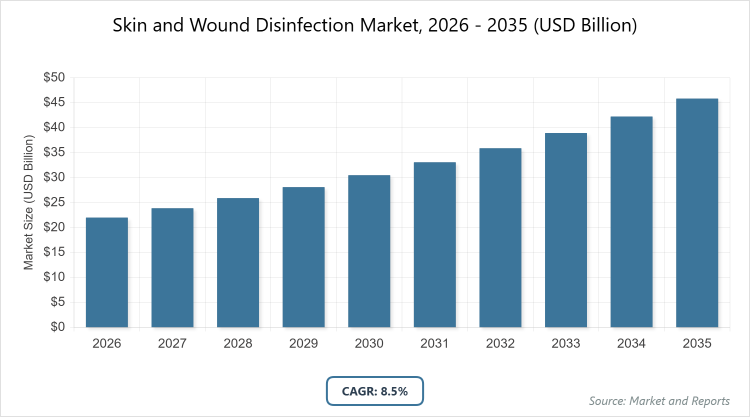
What are the key insights into the Skin and Wound Disinfection market?
- The global Skin and Wound Disinfection market was valued at USD 22 billion in 2025 and is projected to reach USD 50 billion by 2035.
- The market is expected to grow at a CAGR of 8.5% during the forecast period 2026-2035.
- The market is driven by rising incidence of chronic wounds, growing awareness of infection control, and advancements in antiseptic and disinfection technologies.
- In the Treatment segment, Advanced Wound Dressing is the most dominant subsegment (estimated 45-50% share) due to its superior ability to manage exudate, prevent infections, and promote faster healing through integrated antiseptic features; Traditional Wound Care Products is the second dominant due to cost-effectiveness and widespread use in basic care settings.
- In the Product segment, Topical Agents dominate (estimated 30-35% share) as they provide direct antimicrobial action for disinfection; Dressings are second due to their role in sustained release of antiseptics.
- In the Wound Type segment, Chronic Wound dominates (estimated 60% share) owing to high prevalence of diabetes-related ulcers and vascular conditions; Acute Wound is second.
- In the Application segment, Ulcer dominates (estimated 40% share) driven by diabetic and pressure ulcers; Surgical Wound is second due to post-operative infection risks.
- In the End User segment, Hospitals dominate (estimated 50% share) as primary settings for complex wound management and surgical procedures; Clinics are second.
- North America dominates the global market with an estimated 40% share due to high prevalence of chronic conditions, advanced healthcare infrastructure, presence of key players, and strong adoption of innovative technologies.
What is the industry overview of the Skin and Wound Disinfection market?
The Skin and Wound Disinfection market encompasses products and solutions used to cleanse skin and wounds by eliminating harmful microorganisms such as bacteria, viruses, and fungi using antiseptic agents like alcohol, iodine, chlorhexidine, and advanced formulations. This market focuses on preventing infections, promoting healing, and reducing complications in both acute and chronic wounds. It includes a range of antiseptic topical agents, antimicrobial dressings, and related wound care products designed for healthcare facilities, home use, and trauma management. The market addresses critical needs in infection control amid rising chronic diseases, surgical procedures, and post-pandemic hygiene emphasis.
What are the market dynamics shaping the Skin and Wound Disinfection market?
Growth Drivers
The market experiences robust growth from the increasing prevalence of chronic wounds, such as diabetic foot ulcers affecting around 15% of diabetes patients globally and vascular diseases impacting over 200 million people. Heightened awareness of infection prevention, driven by health campaigns and post-COVID hygiene focus, boosts demand for effective disinfection solutions. Advancements in technologies like nanoparticle-based antiseptics, silver-impregnated dressings, and automated systems further propel adoption by improving efficacy and reducing infection risks in clinical and home settings.
Restraints
Limited awareness and inadequate education in developing regions like sub-Saharan Africa and Southeast Asia restrict market penetration, leading to higher untreated infection rates. High costs of advanced products, including silver-based or bioengineered solutions, limit accessibility in low-income areas and constrain growth in price-sensitive markets.
Opportunities
Technological innovations such as silver nanoparticles, iodine-impregnated products, and plant-based non-toxic antiseptics offer significant potential for market expansion. Growing preference for sustainable and biodegradable options like alginate or hydrocolloid-based dressings aligns with environmental concerns and opens new avenues in eco-conscious healthcare segments.
Challenges
Regulatory hurdles, varying standards across regions, and the need for clinical validation of novel products pose challenges. Competition from traditional methods and potential resistance to certain antiseptics also complicate widespread adoption and innovation.
Skin and Wound Disinfection Market: Report Scope
| Report Attributes | Report Details |
| Report Name | Skin and Wound Disinfection Market |
| Market Size 2025 | USD 22 Billion |
| Market Forecast 2035 | USD 50 Billion |
| Growth Rate | CAGR of 8.5% |
| Report Pages | 226 |
| Key Companies Covered | 3M, Smith+Nephew, Mölnlycke Health Care AB, Medtronic, Johnson & Johnson Services, Inc., Convatec Inc., PAUL HARTMANN AG, Cardinal Health, and Others |
| Segments Covered | By Treatment, By Product, By Wound Type, By Gender, By Application, By End User, and By Region |
| Regions Covered | North America, Europe, Asia Pacific (APAC), Latin America, and The Middle East and Africa (MEA) |
| Base Year | 2025 |
| Historical Year | 2020 – 2024 |
| Forecast Year | 2026 – 2035 |
| Customization Scope | Avail customized purchase options to meet your exact research needs. |
How is the Skin and Wound Disinfection market segmented?
The Skin and Wound Disinfection market is segmented by treatment, product, wound type, gender, application, end user, and region.
Based on Treatment Segment, Advanced Wound Dressing is the most dominant due to its integration of antiseptic properties that actively combat infections while maintaining a moist healing environment, significantly driving market growth by addressing complex wound needs effectively; Traditional Wound Care Products is the second most dominant as affordable baseline solutions for routine disinfection and basic wound management in resource-limited settings.
Based on Product Segment, Topical Agents are the most dominant as they offer immediate and targeted antimicrobial action essential for initial disinfection, supporting market expansion through versatility in skin and wound applications; Dressing is the second most dominant due to its dual role in protection and sustained antiseptic delivery.
Based on Wound Type Segment, Chronic Wound dominates as it addresses persistent conditions like diabetic ulcers and pressure sores that require ongoing disinfection, fueling demand for long-term solutions; Acute Wound is second most dominant for its association with trauma and surgical cases needing prompt infection control.
Based on Application Segment, Ulcer is the most dominant driven by high incidence of diabetic and venous ulcers requiring consistent disinfection to prevent complications; Surgical Wound is second most dominant due to risks of post-operative infections in healthcare facilities.
Based on End User Segment, Hospitals dominate as they handle high volumes of complex and surgical wounds with advanced disinfection needs; Clinics are second most dominant for outpatient care and routine wound management.
What are the recent developments in the Skin and Wound Disinfection market?
- In June 2023, Evonik’s subsidiary JeNaCell launched epicite balance wound dressing in Germany, targeted at chronic wounds including pressure ulcers, venous/arterial leg ulcers, diabetic foot ulcers, and soft tissue lesions with low to medium exudation.
- In January 2023, Convatec introduced ConvaFoam in the U.S., an advanced foam dressing designed to support healthcare professionals and patients in effective wound management and disinfection.
Which regions are influencing the Skin and Wound Disinfection market?
- North America to dominate the global market.
North America leads the global Skin and Wound Disinfection market due to high prevalence of chronic conditions like diabetes and vascular diseases, widespread skin burns, presence of major industry players, rapid adoption of advanced technologies, and strong healthcare infrastructure supporting innovative disinfection solutions.
Europe holds a significant position with steady growth driven by aging population, increasing chronic wound cases, established regulatory frameworks promoting infection control, and focus on advanced antiseptic products in countries like Germany, France, and the U.K.
Asia-Pacific exhibits the highest growth rate fueled by rising healthcare investments, improving infrastructure in developing economies, growing awareness of wound care, increasing demand for affordable yet effective disinfection solutions, and expanding access to medical treatments in countries like China, India, and Japan.
Latin America shows moderate growth supported by improving healthcare systems, rising chronic disease burden, and gradual adoption of modern disinfection products, with Brazil and Argentina as key contributors.
Middle East and Africa experiences emerging growth driven by increasing healthcare initiatives, rising surgical procedures, and efforts to address infection control in underserved areas, though limited by economic constraints.
Who are the key market players in the Skin and Wound Disinfection market?
- 3M is a leading player with a strong portfolio of antiseptic solutions and wound care products. Focuses on innovation in antimicrobial technologies and broad market reach.
- Smith+Nephew offers advanced wound management and disinfection products globally. Emphasizes R&D in bioactive and silver-based solutions for infection prevention.
- Mölnlycke Health Care AB specializes in wound care dressings with antiseptic features. Prioritizes sustainable and patient-centric product development.
- Medtronic provides therapy devices and wound care solutions. Invests in integrated systems for surgical and chronic wound disinfection.
- Johnson & Johnson Services, Inc. delivers comprehensive topical and dressing products. Leverages global distribution and brand strength for market expansion.
- Convatec Inc. focuses on advanced foam and antimicrobial dressings. Drives growth through new product launches like ConvaFoam.
Other notable players include PAUL HARTMANN AG, Cardinal Health, Essity Aktiebolag, Coloplast Group, Medline Industries, and B. Braun Medical Inc., all emphasizing innovation, partnerships, and geographic expansion.
What are the emerging market trends in the Skin and Wound Disinfection market?
- Growing adoption of antimicrobial wound dressings incorporating silver ions for enhanced protection and accelerated healing.
- Shift toward products that combine disinfection with advanced wound care for comprehensive management.
- Rising demand for sustainable, biodegradable, and plant-based antiseptic solutions.
- Increased focus on home healthcare disinfection products amid aging populations.
- Integration of nanoparticle and iodine-based technologies for improved efficacy.
What market segments and subsegments are covered in the report?
By Treatment
- Advanced Wound Dressing
- Traditional Wound Care Products
- Negative Pressure Wound Therapy
- Bioactive
- Others
By Product
- Dressing
- Bandages
- Topical Agents
- Wound Closure Agents
- Gauzes and Sponges
- Tapes
- Therapy Devices
- Others
By Wound Type
- Acute Wound
- Chronic Wound
By Gender
- Men
- Women
By Application
- Surgical Wound
- Ulcer
- Burn
- Trauma Wounds
By End User
- Hospitals
- Clinics
- Home Healthcare
- Trauma Centres
By Region
- North America
- U.S.
- Canada
- Europe
- UK
- Germany
- France
- Rest of Europe
- Asia Pacific
- China
- India
- Japan
- Rest of Asia Pacific
- Latin America
- Brazil
- Mexico
- Rest of Latin America
- Middle East & Africa
- UAE
- South Africa
- Rest of Middle East & Africa
Frequently Asked Questions
Skin and Wound Disinfection refers to the process of cleansing skin and wounds to eliminate harmful microorganisms using antiseptic agents, preventing infections and supporting healing.
Key factors include rising chronic wounds from diabetes and vascular diseases, growing infection control awareness, technological advancements in antiseptics, and increasing demand for home healthcare solutions.
The market is projected to grow from USD 22 billion in 2025 to USD 50 billion by 2035.
The market is expected to grow at a CAGR of 8.5% during 2026-2035.
North America will contribute notably due to its dominant share, while Asia-Pacific will see the fastest growth from healthcare investments and awareness.
Major players include 3M, Smith+Nephew, Mölnlycke Health Care AB, Medtronic, Johnson & Johnson Services, Inc., Convatec Inc., and others through innovation and product launches.
The report provides in-depth analysis of market size, growth, segmentation, regional insights, key players, trends, drivers, restraints, opportunities, recent developments, and forecasts.
The value chain includes raw material supply (antiseptics, polymers), manufacturing of products (dressings, topicals), distribution through healthcare channels, application in clinical/home settings, and post-use regulatory compliance.
Trends are evolving toward antimicrobial and sustainable products, with preferences shifting to advanced, easy-to-use solutions for home care and infection prevention.
Regulatory approvals for antiseptics, infection control standards, and environmental concerns favoring biodegradable products influence growth positively, while stringent regulations and sustainability requirements pose challenges.