
Pasteurized Eggs Market Size, Share and Trends 2026 to 2035
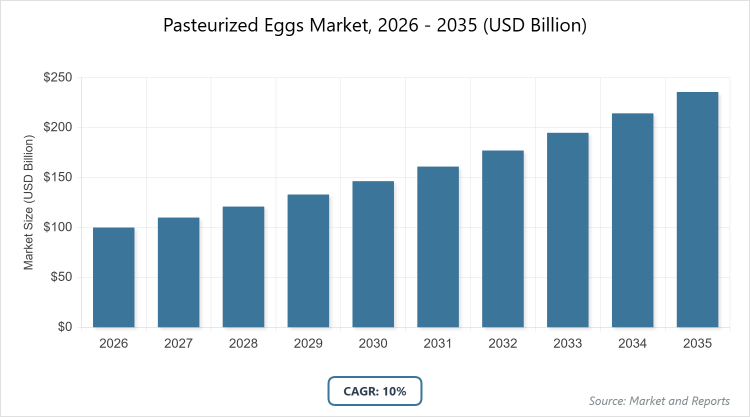
According to MarketnReports, the global Pasteurized Eggs market size was estimated at USD 100 billion in 2025 and is expected to reach USD 260 billion by 2035, growing at a CAGR of 10% from 2026 to 2035. Rising food safety concerns, stringent regulations against Salmonella contamination, and increasing demand from food processing and convenience applications.
What are the Key Insights in the Pasteurized Eggs Market?
- The global Pasteurized Eggs market was valued at USD 100 billion in 2025 and is projected to reach USD 260 billion by 2035.
- The market is expected to grow at a CAGR of 10% during the forecast period 2026-2035.
- The market is driven by growing awareness of foodborne illnesses, regulatory mandates for pathogen reduction, and expanding applications in processed foods and dietary products.
- Whole Egg holds the dominant share among types (approximately 45%) due to its versatility in applications requiring full egg functionality, such as baking and emulsification.
- Bakery & Confectionery dominates applications (around 30%) because pasteurized eggs provide safety in partially cooked or raw formulations while maintaining texture and binding properties.
- The food industry leads end-user segments (over 35%) owing to bulk usage in manufacturing for consistency and compliance with safety standards.
- North America dominates regionally (approximately 40%) due to stringent FDA regulations, high consumer awareness of food safety, and a mature food processing sector.
What defines the Pasteurized Eggs Market?
Industry Overview
The Pasteurized Eggs Market encompasses eggs that undergo pasteurization—a heat treatment process that eliminates harmful bacteria such as Salmonella while preserving nutritional quality and functional properties. This primarily includes liquid forms (whole eggs, whites, yolks) and, to a lesser extent, in-shell pasteurized eggs, making them safer for raw or undercooked consumption in recipes, commercial food production, and vulnerable populations like children, elderly, pregnant individuals, and immunocompromised people. The market serves as a critical bridge between traditional egg usage and heightened food safety standards, supporting industries requiring extended shelf life, reduced contamination risks, and consistent performance in processing.
What are the Market Dynamics in the Pasteurized Eggs Market?
Growth Drivers
The primary growth drivers stem from escalating concerns over Salmonella and other bacterial contaminations in raw eggs, prompting consumers and manufacturers to shift toward pasteurized alternatives. Regulatory bodies, particularly in North America and Europe, enforce or recommend pasteurization for high-risk products and populations, boosting adoption. Additionally, the expansion of food processing industries—such as bakery, sauces, and ready-to-eat meals—relies on pasteurized eggs for safety, extended shelf life, and uniform quality. Rising health consciousness, protein demand in fitness trends, and convenience in commercial kitchens further accelerate demand.
Restraints
High production and processing costs pose a significant restraint, as pasteurization requires specialized equipment, energy-intensive heat treatment, and strict quality controls, making pasteurized eggs more expensive than conventional ones. Limited awareness in developing regions, price sensitivity among consumers, and competition from plant-based egg alternatives driven by veganism trends hinder broader penetration. Supply chain complexities, including maintaining cold storage and freshness, also limit distribution in certain markets.
Opportunities
Emerging markets in the Asia Pacific and Latin America present substantial opportunities due to rapid urbanization, growing middle-class populations, and increasing food safety regulations amid rising contamination incidents. Technological advancements in pasteurization methods (e.g., heat without chemicals or improved monitoring) can reduce costs and enhance appeal. Expansion into dietary supplements and pet food applications, along with potential mandatory pasteurization policies in more countries, offers avenues for market growth.
Challenges
Competition from vegan and plant-based egg substitutes challenges the market as consumers adopt cholesterol-free, sustainable options. Maintaining product quality during extended storage and transportation remains difficult, especially in regions with inadequate cold-chain infrastructure. Allergen labeling requirements, cross-contamination risks in processing facilities, and resistance from traditional egg producers further complicate adoption and scalability.
Pasteurized Eggs Market: Report Scope
| Report Attributes | Report Details |
| Report Name | Pasteurized Eggs Market |
| Market Size 2025 | USD 100 Billion |
| Market Forecast 2035 | USD 260 Billion |
| Growth Rate | CAGR of 10% |
| Report Pages | 220 |
| Key Companies Covered |
National Pasteurized Eggs Inc., Glaum Egg Ranch, Wilcox Farms, Hickman’s Family Farms, Willamette Egg, Sanovo Egg Group, and Others |
| Segments Covered | By Type, By Application, By End-User, and By Region |
| Regions Covered | North America, Europe, Asia Pacific (APAC), Latin America, and The Middle East and Africa (MEA) |
| Base Year | 2025 |
| Historical Year | 2020 – 2024 |
| Forecast Year | 2026 – 2035 |
| Customization Scope | Avail customized purchase options to meet your exact research needs. |
How is the Pasteurized Eggs Market Segmented?
The Pasteurized Eggs market is segmented by type, application, end-user, and region.
Based on Type Segment, Whole Egg is the most dominant segment due to its comprehensive functional properties—emulsification, binding, and foaming—making it essential in a wide range of food applications like bakery, sauces, and desserts, driving market growth through versatility and high-volume usage in commercial processing. The second most dominant is Egg White, favored for its high protein content, low fat, and appeal in health-focused products such as dietary supplements and fitness foods, supporting growth by catering to protein-demanding consumers and clean-label trends.
Based on Application Segment, Bakery & Confectionery is the most dominant segment as pasteurized eggs ensure safety in undercooked or raw preparations like mousses, custards, and icings, driving market expansion by meeting strict hygiene requirements in high-consumption categories. The second most dominant is Sauces & Dressings, where pasteurized eggs provide stable emulsification and extended shelf life in mayonnaise and similar products, contributing to growth through demand for convenient, safe condiments in retail and foodservice.
Based on the end-user segment, the food industry is the most dominant segment owing to bulk procurement needs, regulatory compliance, and consistent quality demands in large-scale manufacturing, propelling overall market growth via industrial-scale adoption. The second most dominant is Foodservice, benefiting from safer egg handling in restaurants and hotels where undercooked dishes are common, driving demand through convenience and risk reduction in high-volume operations.
What Recent Developments have occurred in the Pasteurized Eggs Market?
- Key players have invested in advanced pasteurization technologies to enhance efficiency, reduce energy consumption, and improve product quality, supporting sustainable production amid regulatory pressures.
- Expansion efforts in Asia Pacific markets have accelerated, with companies establishing new facilities to address rising local demand for safer egg products driven by contamination concerns and urbanization.
- Innovations in packaging and cold-chain solutions have emerged to extend shelf life and improve distribution, enabling broader retail availability and reducing waste.
- Strategic partnerships between egg processors and food manufacturers have increased to develop customized pasteurized egg solutions for specific applications like clean-label bakery items.
Which Region Dominates the Pasteurized Eggs Market?
- North America is expected to dominate the global market.
North America dominates the Pasteurized Eggs market primarily due to stringent FDA regulations mandating or strongly recommending pasteurization to combat Salmonella, coupled with high consumer awareness of food safety and a well-established food processing industry in the US and Canada; the US leads within the region owing to large-scale commercial egg production and widespread adoption in bakery, sauces, and institutional foodservice.
Europe holds the second-largest share with robust EU standards on salmonellosis control, including hen vaccination programs and hygiene regulations, supported by high demand in bakery, confectionery, and ready meals across Germany, France, and the UK.
Asia Pacific is the fastest-growing region, fueled by rapid population growth, urbanization, rising disposable incomes, and increasing food safety incidents in countries like China and India, where major egg producers are adopting pasteurization to meet export standards and domestic health demands.
Latin America and the Middle East & Africa show emerging growth potential driven by improving regulatory frameworks and expanding food industries, though limited by infrastructure challenges.
Who are the Key Market Players in the Pasteurized Eggs Market?
- National Pasteurized Eggs Inc. focuses on patented in-shell pasteurization technology, emphasizing retail availability and food safety for vulnerable consumers, with strategies centered on innovation and brand building.
- Glaum Egg Ranch prioritizes sustainable farming and high-quality liquid pasteurized products for industrial clients, leveraging vertical integration to ensure supply chain control and cost efficiency.
- Wilcox Farms employs family-owned operations to deliver fresh, pasteurized eggs to regional markets, with strategies including direct partnerships with foodservice providers for reliable supply.
- Hickman’s Family Farms emphasizes ethical production and expanded processing capabilities to serve growing demand in bakery and sauces, focusing on quality certifications.
- Willamette Egg targets West Coast markets with liquid egg products, adopting strategies of technological upgrades for enhanced pasteurization and distribution networks.
- Sanovo Egg Group operates globally with advanced equipment solutions and egg processing expertise, driving growth through technology provision and partnerships in emerging regions.
What are the Market Trends in the Pasteurized Eggs Market?
- Increasing substitution of raw eggs with pasteurized versions in recipes to mitigate health risks.
- Growing demand for clean-label and minimally processed pasteurized eggs without additives.
- Expansion of applications in protein-rich dietary supplements and functional foods.
- Rising adoption of advanced pasteurization methods to improve sustainability and reduce costs.
- Shift toward sustainable sourcing and ethical egg production is influencing consumer preferences.
- Enhanced focus on cold-chain logistics to maintain quality in global distribution.
What Market Segments and Subsegments are Covered in the Report?
By Type
- Whole Egg
- Egg White
- Egg Yolk
- Others
By Application
- Bakery & Confectionery
- Noodles & Pasta
- Sauces & Dressings
- Dietary Supplements
- Meat & Fish Products
- Dairy Products
- Desserts
- Pet Food
- Others
By End-User
- Food Industry
- Foodservice
- Retail
- Others
By Region
- North America
- U.S.
- Canada
- Europe
- UK
- Germany
- France
- Rest of Europe
- Asia Pacific
- China
- India
- Japan
- Rest of Asia Pacific
- Latin America
- Brazil
- Mexico
- Rest of Latin America
- Middle East & Africa
- UAE
- South Africa
- Rest of Middle East & Africa
Chapter 1. Preface
Chapter 2. Executive Summary
Chapter 3. Global Pasteurized Eggs Market - Industry Analysis
Chapter 4. Global Pasteurized Eggs Market- Competitive Landscape
Chapter 5. Global Pasteurized Eggs Market - Type Analysis
Chapter 6. Global Pasteurized Eggs Market - Application Analysis
Chapter 7. Global Pasteurized Eggs Market - End-User Analysis
Chapter 8. Pasteurized Eggs Market - Regional Analysis
Chapter 9. Company Profiles
Frequently Asked Questions
Pasteurized eggs are eggs heated to a specific temperature to kill harmful bacteria like Salmonella while retaining nutritional value and functionality, making them safer for raw or undercooked use.
Key factors include heightened food safety awareness, regulatory mandates, demand from food processing industries, technological advancements in pasteurization, and expansion in emerging markets.
The market is projected to grow from USD 100 billion in 2025 to USD 260 billion by 2035.
The market is expected to grow at a CAGR of 10% during 2026-2035.
North America will contribute notably due to its dominant share driven by regulations and industry demand.
Major players include National Pasteurized Eggs Inc., Glaum Egg Ranch, Wilcox Farms, Hickman's Family Farms, Willamette Egg, and Sanovo Egg Group.
The report provides comprehensive analysis of market size, growth trends, segmentation, dynamics, regional insights, key players, and forecasts to guide strategic decisions.
Stages include egg production and collection, pasteurization processing, packaging and storage, distribution through cold chains, and end-use in food manufacturing, retail, or foodservice.
Preferences are shifting toward safer, protein-rich, clean-label products with sustainable sourcing, alongside increased use in health-focused and convenient foods.
Regulatory factors include food safety mandates against Salmonella in the US and EU; environmental factors involve sustainable farming pressures and energy use in processing.