
Menopause Market Size, Share and Trends 2026 to 2035
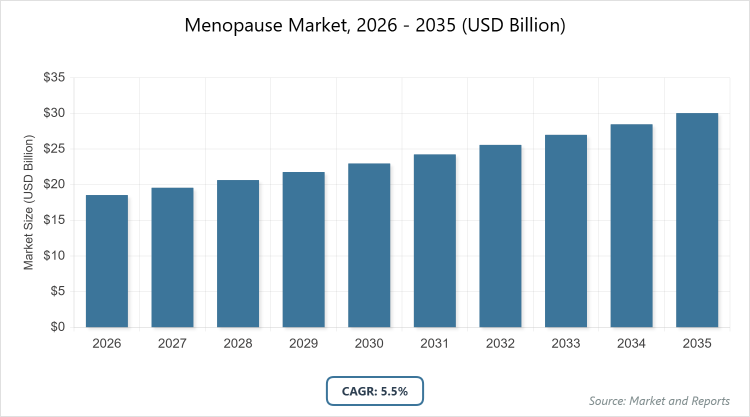
According to MarketnReports, the global Menopause Market size was estimated at USD 18.56 billion in 2025 and is expected to reach USD 31.74 billion by 2035, growing at a CAGR of 5.5% from 2026 to 2035. Menopause Market is driven by the increasing aging female population and rising awareness of menopause-related health issues.
What are the Key Insights into the Menopause Market?
- The global menopause market size was valued at USD 18.56 billion in 2025 and is projected to reach USD 31.74 billion by 2035.
- The market is expected to grow at a CAGR of 5.5% during the forecast period from 2026 to 2035.
- The market is driven by rising awareness of menopause symptoms, increasing female aging population, and advancements in non-hormonal therapies and dietary supplements.
- In the treatment segment, dietary supplements dominate with a 94% share due to their natural ingredients, affordability, and wide accessibility, appealing to women seeking hormone-free options.
- In the distribution channel segment, retail pharmacies dominate with a 50% share because of their convenience and availability of OTC products for immediate symptom relief.
- In the end-user segment, women in menopause dominate with a 60% share owing to the peak symptom intensity during this stage, driving demand for targeted treatments.
- North America dominates the regional market with a 37% share, attributed to high awareness, advanced healthcare infrastructure, and strong presence of key players in the U.S.
What is the Industry Overview of the Menopause Market?
The menopause market encompasses a variety of treatments, supplements, and therapies designed to alleviate symptoms associated with the natural biological process marking the end of a woman's reproductive years, typically occurring between ages 45 and 55, involving hormonal changes that lead to hot flashes, mood swings, and other health concerns. This market includes hormonal and non-hormonal therapies, dietary supplements, and over-the-counter products aimed at improving quality of life during perimenopause, menopause, and postmenopause stages. Market definition refers to the provision of pharmaceutical, nutraceutical, and wellness solutions that address vasomotor symptoms, bone health, and emotional well-being, supporting women through this transition amid growing emphasis on women's health and preventive care.
What are the Market Dynamics in the Menopause Market?
Growth Drivers
The growth drivers in the menopause market are primarily fueled by the expanding global female aging population, as more women enter the menopausal age group, increasing the demand for effective symptom management solutions like dietary supplements and therapies to address hot flashes, mood swings, and bone health issues. Heightened awareness through educational campaigns and social media has destigmatized menopause, encouraging women to seek treatments earlier, supported by healthcare initiatives promoting women's wellness. Advancements in non-hormonal and natural products, driven by R&D investments, offer safer alternatives to traditional hormone replacement therapy (HRT), appealing to health-conscious consumers and expanding market accessibility. Additionally, the rise of e-commerce and telemedicine facilitates easier access to products and consultations, particularly in underserved areas, boosting overall adoption and market expansion.
Restraints
Restraints in the menopause market include concerns over side effects associated with hormonal therapies, such as increased risks of breast cancer and cardiovascular issues, which deter many women from opting for HRT and slow market penetration in risk-averse demographics. Limited access to healthcare in developing regions, coupled with low awareness and cultural stigmas surrounding menopause, restricts diagnosis and treatment uptake, hindering growth in emerging markets. High costs of specialized therapies and supplements can be prohibitive for low-income populations, especially without adequate insurance coverage, leading to reliance on ineffective home remedies. Furthermore, regulatory hurdles for new product approvals and varying standards across countries delay innovations, impacting the timely introduction of advanced solutions.
Opportunities
Opportunities in the menopause market stem from the growing demand for personalized and natural treatments, as women increasingly prefer hormone-free options like herbal supplements and apps for symptom tracking, opening avenues for innovation in customized wellness products. The expansion of digital health tools, including telehealth consultations and AI-driven apps, offers potential to reach remote populations and provide tailored advice, enhancing engagement and market reach. Emerging markets in Asia-Pacific and Latin America present untapped potential due to rising middle-class incomes and improving healthcare infrastructure, where targeted education campaigns can drive adoption. Moreover, partnerships between pharmaceutical companies and wellness brands can lead to hybrid products combining science-backed therapies with lifestyle solutions, differentiating offerings and capturing a broader consumer base.
Challenges
Challenges in the menopause market arise from underdiagnosis due to inconsistent symptoms and lack of standardized testing, leading to delayed treatment and reduced market demand as many women endure issues without seeking help. The persistence of menopause stigma in certain cultures discourages open discussions and product usage, limiting awareness and acceptance. Supply chain issues for natural ingredients in supplements can cause fluctuations in availability and pricing, affecting product consistency and consumer trust. Additionally, competition from alternative therapies like acupuncture and yoga poses a threat, as they appeal to those seeking non-pharmacological options, requiring market players to continually prove efficacy through clinical evidence.
Menopause Market: Report Scope
| Report Attributes | Report Details |
| Report Name | Menopause Market |
| Market Size 2025 | USD 18.56 Billion |
| Market Forecast 2035 | USD 31.74 Billion |
| Growth Rate | CAGR of 5.5% |
| Report Pages | 220 |
| Key Companies Covered |
Bayer AG, Theramex, AbbVie, Inc., Pure Encapsulations, LLC, Dr. Reddy’s Laboratories Ltd., and Others. |
| Segments Covered | By Treatment, By Distribution Channel, By End-User, and By Region. |
| Regions Covered | North America, Europe, Asia Pacific (APAC), Latin America, and The Middle East and Africa (MEA) |
| Base Year | 2025 |
| Historical Year | 2020 - 2024 |
| Forecast Year | 2026 - 2035 |
| Customization Scope | Avail customized purchase options to meet your exact research needs. |
How is the Market Segmentation Structured in the Menopause Market?
The Menopause Market is segmented by treatment, distribution channel, end-user, and region.
By Treatment Segment, the market is divided into various categories where dietary supplements emerges as the most dominant subsegment, followed by non-hormonal therapy as the second most dominant. Dietary supplements' dominance is attributed to their natural composition, ease of access without prescriptions, and growing preference for hormone-free alternatives that address multiple symptoms like hot flashes and mood swings; this drives the market by catering to health-conscious consumers and expanding through retail and online channels, fostering broader adoption and innovation in formulations. Non-hormonal therapy, the second dominant, provides targeted relief for severe symptoms via FDA-approved drugs, contributing to growth by offering safe options for women contraindicated for HRT, thus enhancing treatment diversity and patient outcomes.
By Distribution Channel Segment, retail pharmacies stand out as the most dominant subsegment, with online pharmacies as the second most dominant. Retail pharmacies dominate due to their widespread presence, immediate product availability, and pharmacist consultations for OTC items; this segment drives the market by ensuring accessibility and building consumer trust through in-person guidance, accelerating purchases of supplements and therapies. Online pharmacies, the second dominant, offer convenience, discreet shopping, and competitive pricing, propelling expansion by reaching tech-savvy and remote users, thereby increasing market penetration amid e-commerce growth.
By End-User Segment, women in menopause are the most dominant subsegment, while women in perimenopause rank as the second most dominant. Women in menopause dominate because of the heightened symptom severity requiring comprehensive management; this drives the market by demanding a range of products from supplements to therapies, supported by awareness campaigns that encourage proactive health-seeking. Women in perimenopause, as second dominant, experience early symptoms prompting preventive care, contributing to growth through early adoption of lifestyle and natural solutions, expanding the user base.
What are the Recent Developments in the Menopause Market?
- In January 2026, Bayer AG reported positive results from the OASIS 4 trial for elinzanetant, showing significant reduction in hot flashes for postmenopausal women on endocrine therapy.
- In July 2025, the FDA extended the review period for elinzanetant by 90 days to further analyze Phase III data.
- In May 2025, the FDA approved a new non-hormonal medication for treating night sweats and hot flashes associated with menopause.
- In February 2025, Cosette Pharmaceuticals acquired Mayne Pharma’s women’s health assets for USD 430 million, including 12 patent-protected products.
- In September 2024, Bonafide Health launched Thermella, a hormone-free NK3 receptor antagonist for menopause symptom management.
What is the Regional Analysis of the Menopause Market?
North America to dominate the global market.
North America holds the leading position in the menopause market, driven by high awareness, advanced healthcare systems, and a large aging female population experiencing menopause symptoms. The United States dominates the region, with robust R&D, FDA approvals for innovative therapies, and strong consumer demand for dietary supplements and non-hormonal treatments, fostering growth through education campaigns and accessible products.
Europe maintains a significant share in the menopause market, supported by universal healthcare and increasing obesity rates contributing to early menopause. Germany leads as the dominating country, leveraging its pharmaceutical industry and high prevalence of symptoms, where initiatives promote natural remedies and HRT, driving adoption amid policy focus on women's health.
Asia Pacific emerges as the fastest-growing region in the menopause market, fueled by urbanization and rising chronic conditions among women. China dominates, with government programs addressing menopause through herbal medicines and awareness drives, accelerating demand for affordable supplements to manage symptoms in a large population.
Latin America is gaining momentum in the menopause market, aided by improving access and public health efforts. Brazil stands out as the dominating country, through targeted programs for obesity and diabetes-linked menopause, utilizing retail channels for OTC products to enhance treatment availability.
The Middle East and Africa region is developing in the menopause market, with investments in women's health. Saudi Arabia dominates, via Vision 2030 reforms promoting awareness and therapies for menopause, focusing on cultural acceptance and imported solutions to address rising cases.
Who are the Key Market Players in the Menopause Market?
Bayer AG focuses on innovative drugs like elinzanetant for hot flashes, with strategies including clinical trials and global expansions to address menopausal symptoms effectively.
Theramex specializes in women's health products, employing acquisitions like Duphaston from Viatris to strengthen its portfolio in hormone therapies.
AbbVie, Inc. offers treatments for vasomotor symptoms, pursuing R&D in non-hormonal options and partnerships to enhance accessibility.
Pure Encapsulations, LLC provides natural supplements, with strategies centered on clean-label formulations and e-commerce growth for menopause relief.
Dr. Reddy’s Laboratories Ltd. develops affordable generics, adopting cost-effective manufacturing and market entries in emerging regions.
What are the Market Trends Shaping the Menopause Market?
- Increasing adoption of non-hormonal therapies due to safety concerns with HRT.
- Rise in digital health apps for symptom tracking and personalized advice.
- Growing demand for natural and herbal supplements amid wellness trends.
- Expansion of telemedicine for menopause consultations in remote areas.
- Focus on inclusive marketing to destigmatize menopause globally.
What Market Segments and Their Subsegments are Covered in the Menopause Market Report?
By Treatment- Dietary Supplements
- OTC Pharma Products
- Hormonal Therapy
- Non-Hormonal Therapy
- Herbal Remedies
- Others
- Retail Pharmacies
- Online Pharmacies
- Hospitals
- Clinics
- Others
- Women in Perimenopause
- Women in Menopause
- Women in Postmenopause
- Healthcare Providers
- Others
By Region
- North America
- U.S.
- Canada
- Europe
- UK
- Germany
- France
- Rest of Europe
- Asia Pacific
- China
- India
- Japan
- Rest of Asia Pacific
- Latin America
- Brazil
- Mexico
- Rest of Latin America
- Middle East & Africa
- UAE
- South Africa
- Rest of Middle East & Africa
Frequently Asked Questions
The menopause market involves treatments, supplements, and therapies for managing symptoms like hot flashes and mood swings during women's menopausal transition.
Key factors include aging female populations, awareness campaigns, and innovations in non-hormonal treatments.
The market is projected to grow from USD 18.56 billion in 2026 to USD 31.74 billion by 2035.
The CAGR is expected to be 5.5% during 2026-2035.
North America will contribute notably, with around 37% share due to advanced infrastructure.
Major players include Bayer AG, Theramex, AbbVie, Inc., Pure Encapsulations, LLC, and Dr. Reddy’s Laboratories Ltd.
The report includes size, trends, segmentation, regional analysis, key players, and forecasts to 2035.
Stages encompass R&D, manufacturing, distribution, retail, and consumer usage.
Trends favor natural supplements and digital tools, with preferences for hormone-free, personalized options.
FDA approvals for new therapies and sustainability in natural products influence innovation and adoption.