
Lace-Up Ballet Flats Market Size, Share and Trends 2026 to 2035
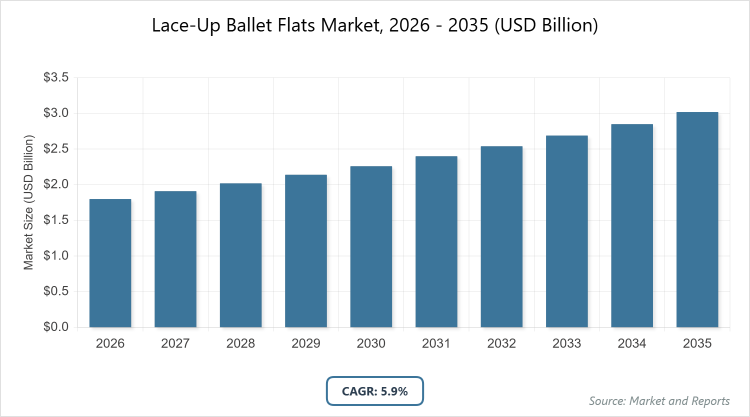
According to MarketnReports, the global Lace-Up Ballet Flats market size was estimated at USD 1.8 billion in 2025 and is expected to reach USD 3.2 billion by 2035, growing at a CAGR of 5.9% from 2026 to 2035. The Lace-Up Ballet Flats Market is driven by the fusion of ballet aesthetics with everyday comfort in fashion trends.
What are the Key Insights into Lace-Up Ballet Flats Market?
- The global lace-up ballet flats market was valued at USD 1.8 billion in 2025 and is projected to reach USD 3.2 billion by 2035.
- The market is expected to grow at a CAGR of 5.9% during the forecast period from 2026 to 2035.
- The lace-up ballet flats market is driven by the popularity of balletcore trends and demand for versatile, comfortable flat shoes.
- The leather segment dominates the material category with a 45% share due to its durability, premium feel, and ability to mold to the foot, appealing to consumers seeking long-lasting, high-quality options.
- The women’s segment dominates the end-user category with a 70% share as lace-up designs enhance feminine styling, supported by social media trends and celebrity influences promoting elegant casual wear.
- Europe dominates the regional market with a 40% share attributable to its fashion heritage, ballet origins in France, and strong demand for sophisticated footwear in urban centers.
What is the Industry Overview of Lace-Up Ballet Flats Market?
Lace-up ballet flats are a stylish hybrid of traditional ballet slippers and modern footwear, featuring lace-up details that wrap around the ankle or foot for added support and aesthetic appeal, often crafted from soft, flexible materials to ensure comfort during prolonged wear. This market includes flats with varying lace designs, targeting consumers who seek elegant, feminine options for casual, professional, or dance-inspired occasions. The market definition encompasses lace-up ballet flats produced in diverse materials, distributed through various channels, and aimed at multiple end-users, with an emphasis on innovations in breathability, sustainability, and customization to align with contemporary fashion demands in the wider footwear industry.
What are the Market Dynamics in the Lace-Up Ballet Flats Market?
Growth Drivers
Growth in the lace-up ballet flats market is primarily fueled by the balletcore aesthetic resurgence, inspired by cultural phenomena like ballet performances and media, where consumers favor delicate lace details for an ethereal look combined with practical flat soles. Increasing focus on comfort-driven fashion, especially post-pandemic, has boosted demand for shoes that offer support without heels, ideal for office-to-evening transitions. Sustainability efforts, including plant-based leathers and recycled laces, attract eco-minded buyers, while digital marketing through TikTok and Instagram amplifies visibility via user-generated content. Collaborations with dance brands and influencers further drive adoption, expanding the market through inclusive sizing and color varieties.
Restraints
Restraints in the lace-up ballet flats market include rising costs of premium materials like satin and leather, which inflate prices and deter budget-conscious consumers in developing regions. Competition from alternative flat styles, such as loafers or sneakers, challenges market share as preferences shift toward more athletic options amid active lifestyles. Seasonal biases limit sales to warmer months or transitional seasons, with lower demand in extreme weather areas. Supply chain vulnerabilities, including labor shortages in artisanal production, delay innovations, while counterfeit goods undermine brand integrity in online marketplaces.
Opportunities
Opportunities in the lace-up ballet flats market lie in integrating smart features, like adjustable laces with app-controlled fits or embedded sensors for posture correction, to engage health-focused consumers. Penetration into emerging markets in Asia-Pacific, with tailored affordable synthetics, capitalizes on growing urbanization and fashion awareness. Brands can leverage vegan materials for cruelty-free lines, appealing to younger demographics, while augmented reality try-ons enhance e-commerce experiences. Tie-ins with cultural events, such as ballet festivals, offer promotional avenues, fostering brand loyalty and premium pricing through limited editions.
Challenges
Challenges facing the lace-up ballet flats market encompass achieving consistent fit across diverse foot shapes, as lace-up mechanisms can vary in tension leading to discomfort or returns. Fast-evolving trends require rapid R&D, burdening smaller players against giants with economies of scale. Regulatory hurdles on chemical dyes and adhesives for eco-compliance raise operational costs, while intellectual property theft of unique lace patterns erodes differentiation. Economic downturns reduce non-essential spending, and adapting designs for inclusivity, like wider widths, demands investment amid global sizing variations.
Lace-Up Ballet Flats Market: Report Scope
| Report Attributes | Report Details |
| Report Name | Lace-Up Ballet Flats Market |
| Market Size 2025 | USD 1.8 Billion |
| Market Forecast 2035 | USD 3.2 Billion |
| Growth Rate | CAGR of 5.9% |
| Report Pages | 220 |
| Key Companies Covered |
Repetto, Chanel, Miu Miu, Zara, French Sole, Pretty Ballerinas, Sigerson Morrison, and Others |
| Segments Covered | By Type, By Material, By Distribution Channel, By End-User, and By Region |
| Regions Covered | North America, Europe, Asia Pacific (APAC), Latin America, and The Middle East and Africa (MEA) |
| Base Year | 2025 |
| Historical Year | 2020 – 2024 |
| Forecast Year | 2026 – 2035 |
| Customization Scope | Avail customized purchase options to meet your exact research needs. |
What is the Market Segmentation of the Lace-Up Ballet Flats Market?
The Lace-Up Ballet Flats market is segmented by type, material, distribution channel, end-user, and region.
By Type: The ankle wrap segment dominates with a significant share, followed by ghillie style as the second most dominant. Ankle wraps’ dominance arises from their secure fit and decorative appeal that elevates simple outfits, making it popular for daily wear; this drives the market by encouraging versatility in styling, boosting sales through social media showcases, and seasonal adaptability.
By Material: The leather segment dominates with a substantial share, followed by synthetic as the second most dominant. Leather prevails thanks to its breathability, elegance, and longevity, suiting premium consumers; it advances market growth by enabling high-margin products and innovations in treatments, expanding appeal in professional settings.
By Distribution Channel: The online segment dominates with a major share, followed by offline as the second most dominant. Online leads due to convenience, virtual fittings, and global reach via platforms like ASOS; this propels the market via personalized recommendations, increasing accessibility and impulse buys among digital natives.
By End-User: The women segment dominates with an overwhelming share, followed by girls as the second most dominant. Women’s supremacy stems from fashion alignment with ballet-inspired trends, offering chic comfort; it stimulates growth through targeted campaigns, fostering repeat purchases and trend propagation.
What are the Recent Developments in the Lace-Up Ballet Flats Market?
- Repetto launched an updated lace-up ballet flat line in early 2025, incorporating sustainable canvas and customizable laces, which spiked interest among dance enthusiasts and led to a 300% rise in online engagement.
- Chanel introduced metallic lace-up variants in its spring 2025 collection, blending classic ballet elements with modern hardware, enhancing luxury appeal and driving boutique sales.
- Miu Miu collaborated with influencers for a limited-edition ghillie-style flat in mid-2025, featuring bold colors, which amplified social media buzz and expanded youth market reach.
- Zara refreshed its affordable lace-up offerings in 2025 with synthetic options, targeting fast fashion, resulting in increased foot traffic and e-commerce conversions.
What is the Regional Analysis of Lace-Up Ballet Flats Market?
- Europe is to dominate the global market.
Europe leads the lace-up ballet flats market with approximately 40% share, rooted in its ballet heritage, high fashion consciousness, and preference for elegant, comfortable footwear in daily life. France dominates as the key country, driven by brands like Repetto in Paris, where cultural ties to ballet fuel demand for authentic designs using premium materials; Italy contributes through artisanal leatherwork in Milan, while the United Kingdom boosts via London-based e-commerce like Net-a-Porter. The region’s projected CAGR of 6.1% to 2035 is supported by sustainability regulations, runway influences, and urban lifestyles favoring versatile flats.
North America holds a robust position with about 30% share, propelled by trend adoption, celebrity endorsements, and athleisure integration in fashion. The United States leads, with New York and Los Angeles driving sales through retailers like Nordstrom, emphasizing customizable options amid balletcore on social media; Canada adds with Toronto’s growing scene for eco-friendly variants. Projected CAGR of 5.5% through 2035 benefits from digital marketing and collaborations, offsetting economic challenges with premium segments.
Asia-Pacific shows dynamic growth with around 20% share, expected to accelerate at a CAGR of 6.5% from 2026 to 2035, thanks to urbanization and Western fashion influences. China dominates, with affordable synthetics via Alibaba in Shanghai, supported by manufacturing in Guangdong; Japan and South Korea contribute via Tokyo’s minimalist trends and Seoul’s K-pop styles. Growth is amplified by e-commerce and youth demographics, countering counterfeits with brand expansions.
Latin America presents emerging opportunities with roughly 5% share, characterized by vibrant fashion and global brand entries. Brazil leads through São Paulo’s street style, with Mercado Libre promoting colorful designs suited to climates; Mexico follows with Mexico City’s imports. CAGR of 5.3% to 2035 is aided by digital growth and sustainability, navigating instability with local adaptations.
The Middle East and Africa (MEA) offer nascent potential with about 5% share, growing from luxury retail and cultural diversification. The United Arab Emirates dominates via Dubai’s malls attracting premium flats from Chanel; Saudi Arabia accelerates with Riyadh’s expansions. CAGR of 5.0% through 2035 thrives on tourism and digital adoption, despite limits, via inclusive materials.
Who are the Key Market Players in the Lace-Up Ballet Flats Market?
- Repetto emphasizes dance-authentic designs with sustainable materials, using collaborations to maintain premium ballet-inspired positioning.
- Chanel innovates luxury lace-up flats with metallic accents, leveraging runway shows and global boutiques for elite market share.
- Miu Miu targets youthful demographics with bold ghillie styles, focusing on influencer partnerships to drive trend-led growth.
- Zara offers fast-fashion affordable options, utilizing rapid supply chains and e-commerce for mass-market penetration.
- French Sole specializes in classic lace-ups, prioritizing comfort and customization to build loyalty in niche segments.
- Pretty Ballerinas adopts colorful, versatile approaches, emphasizing online accessibility for emerging economy expansion.
- Sigerson Morrison pursues artisanal craftsmanship, using high-quality leathers to differentiate in premium urban markets.
What are the Market Trends in Lace-Up Ballet Flats Market?
- Rise of balletcore aesthetics with delicate lace details for ethereal, feminine looks.
- Shift toward sustainable materials like recycled satin and plant-based leathers.
- Popularity of metallic and embellished laces for evening-to-day versatility.
- Integration of adjustable fits via innovative lace mechanisms for inclusivity.
- Growth in pastel and neutral color palettes aligning with minimalist trends.
- Adoption of breathable canvases for summer and transitional wear.
- Focus on hybrid dance-casual designs for active lifestyles.
What Market Segments and Subsegments are Covered in the Lace-Up Ballet Flats Report?
By Type
- Ankle Wrap
- Ghillie Style
- Pointe-Inspired
- Corset Lace
- Others
By Material
- Leather
- Satin
- Canvas
- Synthetic
- Others
By Distribution Channel
- Online
- Offline
- Others
By End-User
- Women
- Girls
- Unisex
- Others
By Region
-
- North America
- U.S.
- Canada
- Europe
- UK
- Germany
- France
- Rest of Europe
- Asia Pacific
- China
- India
- Japan
- Rest of Asia Pacific
- Latin America
- Brazil
- Mexico
- Rest of Latin America
- Middle East & Africa
- UAE
- South Africa
- Rest of Middle East & Africa
- North America
Chapter 1. Preface
Chapter 2. Executive Summary
Chapter 3. Global Lace-Up Ballet Flats Market - Industry Analysis
Chapter 4. Global Lace-Up Ballet Flats Market- Competitive Landscape
Chapter 5. Global Lace-Up Ballet Flats Market - Type Analysis
Chapter 6. Global Lace-Up Ballet Flats Market - Material Analysis
Chapter 7. Global Lace-Up Ballet Flats Market - Distribution Channel Analysis
Chapter 8. Global Lace-Up Ballet Flats Market - End-User Analysis
Chapter 9. Lace-Up Ballet Flats Market - Regional Analysis
Chapter 10. Company Profiles
Frequently Asked Questions
Lace-up ballet flats are flat shoes inspired by ballet slippers, featuring laces that wrap around the foot or ankle for style and support.
Key factors include balletcore trends, sustainable innovations, e-commerce growth, and celebrity endorsements.
The market is projected to grow from USD 1.8 billion in 2025 to USD 3.2 billion by 2035.
The CAGR is expected to be 5.9% from 2026 to 2035.
Europe will contribute notably, holding around 40% share due to fashion heritage and demand.
Major players include Repetto, Chanel, Miu Miu, Zara, French Sole, Pretty Ballerinas, and Sigerson Morrison.
The report provides detailed analysis on size, trends, segments, regions, players, and forecasts from 2026 to 2035.
Stages include sourcing materials, design/production, distribution, marketing, and consumer usage with services.
Trends evolve toward sustainability and versatility, with preferences for comfortable, stylish designs via social influences.
Eco-regulations promote sustainable materials, driving innovation and growth through low-impact practices.