
Athletic Footwear Market Size, Share and Trends 2026 to 2035
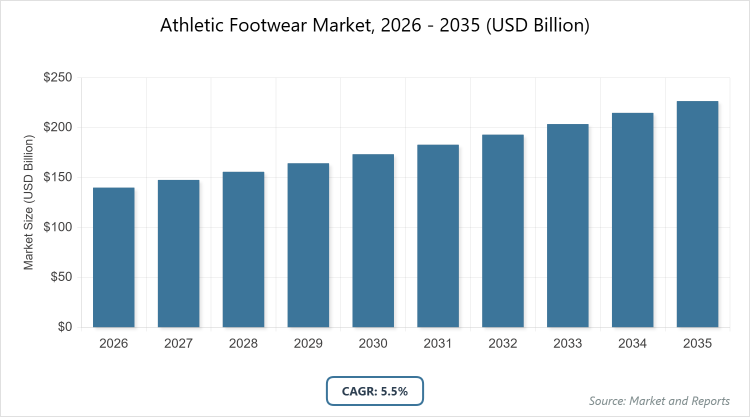
According to MarketnReports, the global Athletic Footwear market size was estimated at USD 140 billion in 2025 and is expected to reach USD 240 billion by 2035, growing at a CAGR of 5.5% from 2026 to 2035. Athletic Footwear Market is driven by increasing health awareness and participation in sports activities.
What are the Key Insights of Athletic Footwear Market?
- The global athletic footwear market was valued at USD 140 billion in 2025 and is projected to reach USD 240 billion by 2035.
- The market is expected to grow at a CAGR of 5.5% during the forecast period from 2026 to 2035.
- The market is driven by increasing health awareness and participation in sports and fitness activities.
- The running shoes subsegment dominates the product type segment with a share of 35%.
- It is dominated due to its versatility for daily fitness, casual wear, and widespread appeal in running events and marathons.
- The amateur athletic subsegment dominates the application segment with a share of 70%.
- It is dominated because most consumers use athletic footwear for recreational activities rather than professional sports, driven by rising fitness trends.
- The men subsegment dominates the end-user segment with a share of 55%.
- It is dominated owing to higher male participation in sports and fitness, along with targeted marketing for performance-oriented products.
- Asia Pacific dominates the global market with a share of 42%.
- It is dominated attributed to large population bases, rising disposable incomes, and rapid urbanization in countries like China and India.
What is the Athletic Footwear Industry Overview?
The athletic footwear market encompasses specialized shoes designed for sports, fitness, and active lifestyles, including running, training, and team sports footwear that prioritize performance, comfort, and durability. Market definition includes all footwear engineered with advanced materials like cushioning foams, breathable meshes, and supportive structures to enhance athletic performance while also serving casual wear through athleisure trends. This industry integrates innovation in design and technology to meet consumer demands for health-oriented products.
What are the Market Dynamics in Athletic Footwear?
Growth Drivers
Rising health consciousness globally is fueling demand for athletic footwear, as more individuals engage in fitness activities like running and gym workouts to combat sedentary lifestyles. Technological advancements, such as improved cushioning and lightweight materials, enhance product appeal and performance, attracting consumers seeking better support and injury prevention. The athleisure trend blurs lines between sportswear and casual attire, expanding market reach beyond athletes to everyday users. Government initiatives promoting sports infrastructure in emerging economies further boost participation and footwear adoption.
Restraints
High costs of premium athletic footwear limit accessibility for price-sensitive consumers in developing regions, hindering market penetration. Counterfeit products erode brand trust and revenue for legitimate manufacturers, as low-quality fakes flood online and offline channels. Supply chain disruptions, including raw material shortages and geopolitical tensions, increase production costs and delay deliveries. Intense competition from numerous brands leads to market saturation, making it challenging for smaller players to gain share.
Opportunities
Sustainability trends open avenues for eco-friendly footwear using recycled materials, appealing to environmentally conscious consumers and differentiating brands. Expansion into emerging markets like Southeast Asia offers growth potential due to rising middle-class populations and e-commerce adoption. Personalization through 3D printing and AI-driven designs allows customized fits, enhancing customer loyalty and premium pricing. Collaborations with influencers and athletes can amplify brand visibility and tap into niche segments like women's and kids' athletics.
Challenges
Fluctuating raw material prices, such as rubber and synthetics, impact profit margins and force frequent price adjustments. Regulatory pressures on environmental standards require costly compliance for global operations. Rapid changes in fashion trends demand constant innovation, risking inventory obsolescence for slower-adapting companies. Economic uncertainties, like inflation, reduce discretionary spending on non-essential athletic gear in volatile markets.
Athletic Footwear Market: Report Scope
| Report Attributes | Report Details |
| Report Name | Athletic Footwear Market |
| Market Size 2025 | USD 140 Billion |
| Market Forecast 2035 | USD 240 Billion |
| Growth Rate | CAGR of 5.5% |
| Report Pages | 220 |
| Key Companies Covered | Nike, Adidas, Puma, ASICS, New Balance, Skechers, Under Armour, and Others |
| Segments Covered | By Product Type, By Application, By End-User, and By Region |
| Regions Covered | North America, Europe, Asia Pacific (APAC), Latin America, and The Middle East and Africa (MEA) |
| Base Year | 2025 |
| Historical Year | 2020 - 2024 |
| Forecast Year | 2026 - 2035 |
| Customization Scope | Avail customized purchase options to meet your exact research needs. |
What is the Athletic Footwear Market Segmentation?
The Athletic Footwear market is segmented by product type, application, end-user, and region.
Based on Product Type Segment. The running shoes segment is the most dominant, holding approximately 35% market share, due to its widespread use in fitness routines and daily activities, which drives overall market growth by appealing to a broad consumer base seeking comfort and versatility. The sports shoes segment is the second most dominant, with around 25% share, as it caters to specific activities like basketball and soccer, contributing to market expansion through specialized performance features that attract dedicated athletes.
Based on Application Segment. The amateur athletic segment is the most dominant, capturing about 70% market share, because it addresses the needs of casual users in gyms and outdoor exercises, propelling market growth via increased accessibility for non-professionals. The professional athletic segment is the second most dominant, with roughly 30% share, as it focuses on high-performance needs for competitive sports, aiding market drive through endorsements and technological innovations.
Based on End-User Segment. The men segment is the most dominant, accounting for 55% market share, owing to higher sports participation rates among males, which boosts market growth through targeted product lines emphasizing durability and style. The women segment is the second most dominant, with 35% share, driven by growing female involvement in fitness, helping drive the market with designs focused on biomechanics and aesthetics.
What are the Recent Developments in Athletic Footwear Market?
- In 2025, Nike expanded its sustainable footwear line using recycled materials, aligning with eco-friendly trends and targeting environmentally aware consumers to boost market share.
- In late 2025, Adidas achieved record-breaking Q3 results, driven by strong sales in performance shoes and strategic media investments in the U.S., enhancing its competitive position.
- In early 2026, ASICS launched advanced GEL technology updates in running shoes, incorporating better cushioning for marathon runners, which increased brand loyalty among fitness enthusiasts.
- In 2025, Puma collaborated with influencers for limited-edition releases, focusing on athleisure designs that blended style and function, expanding reach to younger demographics.
What is the Athletic Footwear Regional Analysis?
Asia Pacific to dominate the global market.
Asia Pacific holds the largest share at 42%, driven by massive populations in China and India, where urbanization and rising incomes fuel demand for affordable athletic footwear; China leads as the dominant country with extensive manufacturing and e-commerce growth.
North America accounts for 34% share, supported by high fitness participation and premium brands; the United States is the dominant country, benefiting from strong retail infrastructure and sports culture.
Europe captures 15% share, emphasizing sustainable and innovative products; Germany stands out as the dominant country due to its focus on quality engineering and outdoor activities.
Latin America has 5% share, growing through increasing sports events; Brazil is the dominant country, driven by soccer popularity and emerging middle-class consumers.
The Middle East and Africa hold 4% share, with potential in youth demographics; South Africa leads as the dominant country, aided by urban fitness trends and international brand expansions.
What are the Key Market Players and Strategies in Athletic Footwear?
- Nike. focuses on innovation through advanced technologies like Flyknit and sustainable materials, investing in direct-to-consumer channels and athlete endorsements to maintain leadership and drive global sales.
- Adidas. Adidas emphasizes performance enhancements via Boost cushioning and partnerships with sports leagues, while expanding e-commerce and sustainability initiatives to capture market share in emerging regions.
- Puma. Puma pursues collaborations with celebrities and limited-edition releases, prioritizing athleisure trends and digital marketing to appeal to younger consumers and boost brand visibility.
- ASICS. ASICS concentrates on specialized running gear with GEL technology, targeting marathon enthusiasts through research-driven designs and community events to enhance loyalty.
- New Balance. New Balance highlights American manufacturing and customizable options, focusing on comfort for everyday athletes and eco-friendly practices to differentiate in competitive markets.
- Skechers. Skechers leverages comfort-focused designs and affordable pricing, using celebrity endorsements and global retail expansion to attract casual fitness users.
- Under Armour. Under Armour invests in connected footwear with smart sensors, partnering with athletes for performance apparel integration to grow in tech-savvy segments.
What are the Athletic Footwear Market Trends?
- Sustainability with eco-friendly materials like recycled plastics gaining traction.
- Integration of smart tech such as fitness trackers in shoes.
- Rise of athleisure blending performance with casual fashion.
- Customization options via 3D printing for personalized fits.
- Growth in women's and kids' segments due to inclusive designs.
- Expansion of direct-to-consumer sales through online platforms.
What are the Market Segments and their Subsegments Covered in the Athletic Footwear Report?
By Product Type
-
Running Shoes
-
Sports Shoes
-
Trekking/Hiking Shoes
-
Aerobic Shoes
-
Walking Shoes
-
Basketball Shoes
-
Soccer Shoes
-
Tennis Shoes
-
Training Shoes
-
Others
Application
- Professional Athletic
- Amateur Athletic
End-User
- Men
- Women
- Kids
By Region
- North America
- U.S.
- Canada
- Europe
- UK
- Germany
- France
- Rest of Europe
- Asia Pacific
- China
- India
- Japan
- Rest of Asia Pacific
- Latin America
- Brazil
- Mexico
- Rest of Latin America
- Middle East & Africa
- UAE
- South Africa
- Rest of Middle East & Africa
Frequently Asked Questions
Athletic footwear refers to shoes designed for sports, fitness, and active lifestyles, featuring advanced cushioning, support, and materials for performance and comfort.
Key factors include rising health awareness, technological innovations, athleisure trends, and e-commerce expansion.
The market is projected to grow from USD 140 billion in 2025 to USD 240 billion by 2035.
The CAGR is expected to be 5.5% from 2026 to 2035.
Asia Pacific will contribute notably, driven by population growth and rising incomes.
Major players include Nike, Adidas, Puma, ASICS, New Balance, Skechers, and Under Armour.
The report provides comprehensive analysis, forecasts, trends, and strategic insights.
Stages include raw material sourcing, manufacturing, distribution, retail, and end-user consumption.
Trends lean toward sustainability, personalization, and tech integration, with preferences for versatile athleisure styles.
Regulations on sustainable materials and environmental standards push for eco-friendly production, impacting costs and innovation.