
Animal Wound Care Market Size, Share and Trends 2026 to 2035
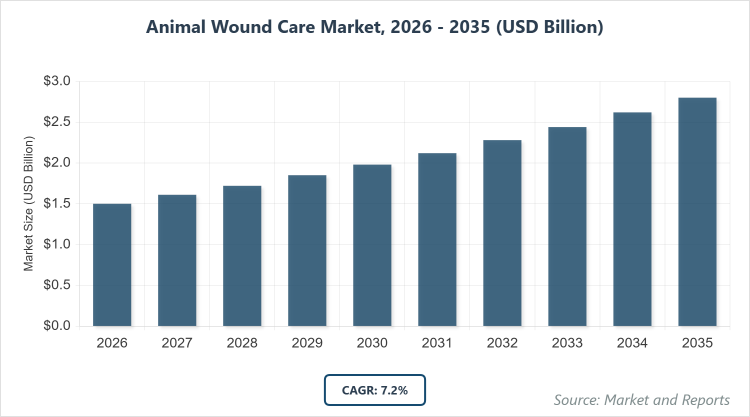
According to MarketnReports, the global Animal Wound Care Market size was estimated at USD 1.5 Billion in 2025 and is expected to reach USD 3.0 Billion by 2035, at a CAGR of 7.2% from 2026 to 2035. Animal Wound Care Market is driven by increasing pet ownership and advancements in veterinary healthcare.
What is Animal Wound Care Market Industry Overview?
The animal wound care market encompasses products and solutions designed to manage and heal wounds in animals, including companion pets and livestock. This market includes a range of items such as dressings, bandages, sutures, and advanced therapies aimed at preventing infection, promoting healing, and reducing recovery time. Market definition refers to the industry focused on veterinary wound management, driven by the need for effective treatment of injuries from accidents, surgeries, or chronic conditions in animals.
What are Animal Wound Care Market Key Insights?
- The global animal wound care market was valued at USD 1.5 billion in 2025 and is projected to reach USD 3.0 billion by 2035.
- The market is expected to grow at a CAGR of 7.2% during the forecast period from 2026 to 2035.
- The market is driven by rising pet adoption rates, increasing veterinary healthcare expenditures, and technological advancements in wound care products.
- Surgical wound care products dominate the product segment with a 45% share due to their essential role in post-operative care and high demand in veterinary surgeries; advanced wound care products hold the second position with 30% share as they offer superior healing properties for complex wounds.
- Companion animals dominate the animal type segment with a 60% share owing to the growing trend of pet humanization and higher spending on pet health; livestock animals are the next dominant with 40% share driven by the need for wound management in agricultural settings to maintain productivity.
- North America dominates the regional segment with a 40% share attributed to high pet ownership, advanced veterinary infrastructure, and strong R&D investments.
What are Animal Wound Care Market Dynamics?
Growth Drivers
The primary growth drivers in the animal wound care market include the surge in pet ownership worldwide, particularly in urban areas where animals are treated as family members, leading to increased demand for high-quality wound care solutions. Advancements in veterinary medicine, such as the development of bioactive dressings and antimicrobial agents, further propel market expansion by improving treatment outcomes and reducing infection risks. Additionally, rising awareness among pet owners and farmers about animal welfare standards contributes to higher adoption of specialized wound care products, fostering sustained market growth.
Restraints
Key restraints affecting the animal wound care market involve the high costs associated with advanced wound care products and treatments, which can limit accessibility in developing regions where veterinary budgets are constrained. Limited availability of skilled veterinary professionals in rural areas also hinders effective wound management, leading to suboptimal care and slower market penetration. Moreover, stringent regulatory approvals for new veterinary products can delay innovation and increase development expenses, posing challenges for market players aiming to expand their portfolios.
Opportunities
Opportunities in the animal wound care market arise from the expanding e-commerce channels for veterinary products, enabling easier access to a wide range of wound care items for consumers in remote locations. Emerging markets in Asia-Pacific and Latin America present significant potential due to growing livestock industries and increasing pet adoption, creating demand for affordable yet effective solutions. Furthermore, investments in research for sustainable and eco-friendly wound care materials, such as biodegradable dressings, open avenues for differentiation and market entry in environmentally conscious segments.
Challenges
Challenges in the animal wound care market include the variability in wound healing processes across different animal species, which complicates product standardization and efficacy testing. Intense competition from generic and low-cost alternatives pressures pricing strategies, potentially eroding profit margins for premium brands. Additionally, the impact of zoonotic diseases and supply chain disruptions, as seen in recent global events, can affect raw material availability and distribution, challenging the market’s resilience and growth trajectory.
Animal Wound Care Market Report Scope
| Report Attributes | Report Details |
| Report Name | Animal Wound Care Market |
| Market Size 2025 | USD 1.5 Billion |
| Market Forecast 2035 | USD 3.0 Billion |
| Growth Rate | CAGR of 7.2% |
| Report Pages | 220 |
| Key Companies Covered | Elanco Animal Health, 3M Company, B. Braun Melsungen AG, Virbac, Medtronic, Johnson & Johnson (Ethicon), and Others |
| Segments Covered | By Product, By Animal Type, By End-User, and By Region |
| Regions Covered | North America, Europe, Asia Pacific (APAC), Latin America, and The Middle East and Africa (MEA) |
| Base Year | 2025 |
| Historical Year | 2020 – 2024 |
| Forecast Year | 2026 – 2035 |
| Customization Scope | Avail customized purchase options to meet your exact research needs. |
What is Animal Wound Care Market Segmentation?
The Animal Wound Care Market is segmented by product, animal type, end-user, and region. All the segments have been analyzed based on present and future trends and the market is estimated from 2026 to 2035.
Based on Product Segment, Surgical wound care products are the most dominant subsegment, holding approximately 45% market share, primarily because they are indispensable for managing post-surgical incisions and traumatic injuries in animals, driving the market through increased veterinary procedures and emphasis on infection control. Advanced wound care products rank as the second most dominant with around 30% share, as they accelerate healing in chronic wounds via moisture retention and bioactive components, contributing to overall market growth by addressing complex cases that traditional methods cannot handle effectively.
Based on Animal Type Segment, Companion animals dominate this segment with about 60% share, driven by the rising trend of pet ownership and greater willingness to invest in health products for dogs and cats, which boosts market expansion through demand for specialized care. Livestock animals are the second dominant subsegment at 40%, fueled by the agricultural sector’s need to maintain animal productivity and health, thereby supporting market growth via large-scale applications in farming operations.
Based on End-User Segment, Veterinary hospitals dominate with roughly 50% share, as they handle complex cases requiring professional intervention and advanced equipment, propelling the market by serving as key distribution points for innovative products. Veterinary clinics follow as the second dominant at 30%, offering accessible outpatient care that drives adoption of wound care solutions in routine treatments, enhancing market penetration in community settings.
What are Animal Wound Care Market Recent Developments?
- In 2025, Elanco Animal Health launched a new line of antimicrobial wound sprays designed for companion animals, incorporating natural ingredients to reduce infection risks and promote faster healing, which received positive feedback from veterinarians for its efficacy in home care applications.
- 3M Company acquired a small biotech firm specializing in regenerative wound therapies in late 2024, aiming to integrate stem cell-based dressings into their animal care portfolio, strengthening their position in advanced wound management.
- Virbac introduced an eco-friendly bandage range in 2025, made from biodegradable materials, targeting environmentally conscious pet owners and expanding their market reach in Europe.
What is Animal Wound Care Market Regional Analysis?
North America to dominate the global market.
North America holds the largest share in the animal wound care market, primarily due to high pet adoption rates, robust veterinary infrastructure, and significant investments in animal health R&D. The United States dominates within this region, driven by advanced healthcare facilities, a large companion animal population exceeding 150 million pets, and supportive policies for veterinary innovations, which collectively enhance market growth through increased product adoption and awareness.
Europe ranks as the second-largest region, benefiting from stringent animal welfare regulations and a growing focus on sustainable farming practices. Germany leads in Europe, with its strong pharmaceutical industry and high livestock production, fostering demand for effective wound care solutions to minimize economic losses from animal injuries.
Asia-Pacific is experiencing the fastest growth, fueled by rising disposable incomes, urbanization, and expanding livestock sectors. China dominates this region, supported by its massive agricultural base and increasing pet ownership in urban areas, driving market expansion through government initiatives for animal health and import of advanced technologies.
Latin America shows moderate growth, driven by agricultural economies and emerging pet care trends. Brazil is the dominant country here, with its extensive cattle farming industry requiring reliable wound management to sustain exports, alongside growing veterinary services in urban centers.
The Middle East and Africa region lags but holds potential due to improving veterinary access. South Africa leads, with investments in wildlife conservation and livestock health programs addressing wound care needs in both domestic and wild animals.
What are Animal Wound Care Market Key Players?
Elanco Animal Health. Elanco focuses on innovation through R&D investments in antimicrobial and regenerative therapies, partnering with veterinary clinics to expand distribution and emphasizing sustainable product development to capture eco-conscious markets.
3M Company. 3M leverages its expertise in adhesive technologies to offer advanced dressings, adopting a strategy of acquisitions and collaborations with biotech firms to enhance product portfolios and strengthen global supply chains.
B. Braun Melsungen AG. B. Braun emphasizes high-quality surgical products, employing strategies like customized solutions for veterinary applications and expanding presence in emerging markets through local manufacturing partnerships.
Virbac. Virbac pursues growth via product diversification, including natural and biodegradable options, with a focus on digital marketing and e-commerce to reach pet owners directly and build brand loyalty.
Medtronic. Medtronic integrates advanced medical devices into animal care, using cross-industry technology transfer and strategic alliances with research institutions to drive innovation in wound therapy devices.
Johnson & Johnson (Ethicon). Ethicon concentrates on suture and stapler advancements, implementing training programs for veterinarians and global expansion strategies to maintain leadership in surgical wound care.
What are Animal Wound Care Market Trends?
- Increasing adoption of advanced wound dressings like hydrocolloids and foams for faster healing in companion animals.
- Growing integration of telemedicine in veterinary wound care for remote monitoring and consultation.
- Rising demand for antimicrobial products to combat antibiotic-resistant infections in livestock.
- Expansion of e-commerce platforms facilitating easy access to wound care supplies for pet owners.
- Emphasis on sustainable and biodegradable materials in product development to meet environmental standards.
- Surge in pet insurance coverage encouraging higher spending on premium wound care treatments.
What are Animal Wound Care Market Segments Covered?
- By Product
- Surgical Wound Care Products
- Advanced Wound Care Products
- Traditional Wound Care Products
- Therapy Devices
- Antimicrobials
- Moist Wound Dressings
- Dry Wound Dressings
- Bandages
- Sutures and Staples
- Tissue Adhesives
- Others
- By Animal Type
- Companion Animals
- Livestock Animals
- Dogs
- Cats
- Horses
- Cattle
- Pigs
- Sheep
- Poultry
- Exotic Animals
- Others
- By End-User
- Veterinary Hospitals
- Veterinary Clinics
- Home Care Settings
- Farms
- Zoos
- Research Institutes
- Animal Shelters
- Pet Owners
- Livestock Owners
- Veterinary Pharmacies
- Others
- By Region
-
- North America
- U.S.
- Canada
- Europe
- UK
- Germany
- France
- Rest of Europe
- Asia Pacific
- China
- India
- Japan
- Rest of Asia Pacific
- Latin America
- Brazil
- Mexico
- Rest of Latin America
- Middle East & Africa
- UAE
- South Africa
- Rest of Middle East & Africa
- North America
Frequently Asked Questions
The animal wound care market refers to the industry providing products and solutions for managing wounds in animals, including dressings, sutures, and therapies to promote healing and prevent infections.
Key factors include rising pet adoption, advancements in veterinary technologies, increasing healthcare spending on animals, and expansion in emerging markets.
The market was valued at USD 1.5 billion in 2025 and is projected to reach USD 3.0 billion by 2035.
The CAGR is expected to be 7.2% from 2026 to 2035.
North America will contribute notably, holding around 40% of the market share due to advanced infrastructure and high pet ownership.
Major players include Elanco Animal Health, 3M Company, B. Braun Melsungen AG, Virbac, Medtronic, and Johnson & Johnson (Ethicon).
The report provides comprehensive analysis including market size, trends, segmentation, regional insights, key players, and forecasts.
Stages include raw material sourcing, manufacturing, distribution through channels like e-commerce and veterinary suppliers, and end-use application in clinics or homes.
Trends are shifting towards sustainable products and advanced therapies, with consumers preferring easy-to-use, effective solutions for pet health.
Regulations on veterinary product approvals and environmental concerns pushing for biodegradable materials are key influencers.