
Music Tourism Market Size, Share and Trends 2026 to 2035
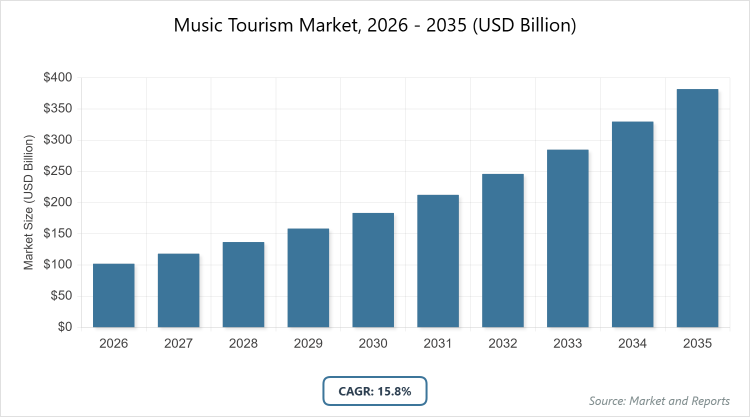
According to MarketnReports, the global Music Tourism Market size was estimated at USD 102 billion in 2025 and is expected to reach USD 441 billion by 2035, growing at a CAGR of 15.8% from 2026 to 2035. Music Tourism Market is driven by increasing demand for live music experiences and experiential travel.What are the key insights into the Music Tourism Market?
- The global Music Tourism Market was valued at USD 102 billion in 2025 and is projected to reach USD 441 billion by 2035.
- The market is expected to grow at a CAGR of 15.8% during the forecast period from 2026 to 2035.
- The market is driven by rising demand for immersive live music events, social media influence, and government initiatives promoting cultural tourism.
- In the type segment, concerts dominate with approximately 53% market share due to their appeal for premium, artist-specific experiences and global touring opportunities.
- In the age group segment, 18 to 34 years holds about 65% share because of millennials and Gen Z's preference for experiential travel and social sharing.
- In the booking mode segment, online travel agencies command roughly 55% share owing to convenience, comprehensive packages, and digital integration.
- North America dominates the regional market with approximately 39% share, attributed to a strong live music culture, major festivals like Coachella, and high disposable incomes in the US.
What is the industry overview of the Music Tourism Market?
The Music Tourism Market encompasses travel activities primarily motivated by music-related experiences, including attending live concerts, music festivals, cultural events, and visiting iconic music destinations such as heritage sites or studios. Market definition refers to music tourism as a niche within the broader tourism industry where individuals or groups journey to engage with music performances, explore musical histories, and participate in immersive cultural activities, often combining elements like accommodations, transportation, and merchandise. This market integrates entertainment, hospitality, and travel sectors to cater to diverse demographics seeking unique, memorable experiences that blend global music trends with local cultures, fostering economic growth through event-driven tourism and digital promotions.
What are the market dynamics of the Music Tourism Market?
Growth Drivers
The growth drivers of the Music Tourism Market are significantly influenced by the surge in live music events and festivals, fueled by digital streaming platforms like Spotify and TikTok that convert online fandom into physical attendance, with over 40% of travelers citing music as a key motivator. Rising disposable incomes among the global middle class, particularly in emerging economies, enable more spending on experiential travel, while government policies such as the American Music Tourism Act and investments in infrastructure enhance accessibility and promotion. Social media amplification and collaborations between artists and tourism boards further drive international participation, creating economic multipliers through ancillary spending on accommodations and local attractions.
Restraints
Restraints in the Music Tourism Market include escalating costs for travel, tickets, and accommodations, which deter budget-conscious travelers, as evidenced by surveys showing nearly half of potential attendees skipping events due to prices exceeding thresholds like £200. Seasonal dependencies and overcrowding at popular venues lead to uneven demand and negative experiences, while regulatory hurdles and environmental concerns, such as carbon emissions from long-haul flights, impose additional burdens on organizers. Limited infrastructure in developing regions also restricts scalability, exacerbating accessibility issues for remote or niche events.
Opportunities
Opportunities in the Music Tourism Market stem from the integration of technology, such as virtual reality for hybrid events and AI-driven personalized itineraries, allowing expansion into untapped markets like Asia Pacific through niche genres like K-pop. Partnerships with local communities for sustainable, culturally immersive packages can attract eco-conscious travelers, while emerging destinations in Latin America and Africa offer growth via authentic music heritage tours. The rise of post-pandemic experiential demand opens avenues for bundled offerings combining music with culinary or adventure tourism, supported by investments in digital ticketing and global connectivity.
Challenges
Challenges in the Music Tourism Market involve managing post-pandemic shifts in consumer behavior, where fans prioritize high-quality, meaningful events over quantity, leading to competition for attendance amid rising costs and false alarm concerns from economic uncertainties. Aligning artist schedules with tourism calendars creates logistical complexities, while varying international regulations on events and travel visas hinder cross-border mobility. Sustainability pressures, including reducing event footprints, add operational costs, and educating markets on the value of music tourism remains difficult in regions with low awareness.
Music Tourism Market: Report Scope
| Report Attributes | Report Details |
| Report Name | Music Tourism Market |
| Market Size 2025 | USD 102 Billion |
| Market Forecast 2035 | USD 441 Billion |
| Growth Rate | CAGR of 15.8% |
| Report Pages | 220 |
| Key Companies Covered |
Live Nation Entertainment, Anschutz Entertainment Group, Inc., CTS EVENTIM AG & Co. KGaA, HYBE Co., Ltd., Glastonbury Festival Events Limited, and Others. |
| Segments Covered | By Type, By Age Group, By Booking Mode, and By Region. |
| Regions Covered | North America, Europe, Asia Pacific (APAC), Latin America, and The Middle East and Africa (MEA) |
| Base Year | 2025 |
| Historical Year | 2020 - 2024 |
| Forecast Year | 2026 - 2035 |
| Customization Scope | Avail customized purchase options to meet your exact research needs. |
How is the Music Tourism Market segmented?
The Music Tourism Market is segmented by type, age group, booking mode, and region.By Type Segment, concerts are the most dominant, holding about 53% market share, followed by festivals as the second most dominant with around 35%. Concerts' dominance results from their focus on global artist tours and premium experiences that draw dedicated fans willing to travel far, driving the market by generating high revenue through ticket sales and ancillary spending; festivals contribute by offering multi-day immersive events that integrate cultural elements, boosting tourism in host destinations and attracting diverse international crowds.
By Age Group Segment, 18 to 34 years is the most dominant with approximately 65% share, while 34 to 54 years is the second most dominant at about 20%. The 18 to 34 years group's leadership stems from their tech-savvy nature and preference for social, experiential travel, driving market growth through high engagement on platforms like TikTok and attendance at festivals; the 34 to 54 years segment supports expansion via nostalgia-driven trips to heritage sites and concerts, increasing spending on premium packages.
By Booking Mode Segment, online travel agencies are the most dominant with around 55% share, followed by direct booking as the second most dominant at roughly 25%. Online travel agencies lead due to their convenience in offering integrated packages with comparisons and reviews, driving the market by facilitating global access and impulse bookings; direct booking aids growth through personalized, cost-effective options via event websites, appealing to loyal fans and enhancing organizer revenues.
What are the recent developments in the Music Tourism Market?
- In May 2025, the state of Assam launched a new concert tourism initiative, including a comprehensive Concert Tourism Policy to attract international performers and boost live music events, positioning the region as a key destination.
- In April 2025, Hans Zimmer announced a 24-city North American tour featuring rearranged film scores with immersive visuals, starting in September 2025, enhancing music tourism through orchestral experiences.
- In March 2025, KQ Entertainment partnered with AEG Presents for ATEEZ's worldwide tour, expanding K-pop's global reach and production quality to attract international fans.
- In December 2024, Vinyl Group acquired Concrete Playground for $5 million, integrating digital travel guides to enhance music-related tourism in Australian cities.
- In September 2024, Concord Label Group merged Fantasy Records with Concord Records to streamline operations and support music event promotions.
What is the regional analysis of the Music Tourism Market?
North America to dominate the global market.North America leads the Music Tourism Market, driven by its vibrant live entertainment scene and high consumer spending on events like Coachella and Lollapalooza, with the United States as the dominating country due to its music heritage in cities like Nashville and Las Vegas, supported by policies like the American Music Tourism Act that promote economic impacts through festivals and tours.
Europe exhibits strong growth through historical music festivals such as Glastonbury and Tomorrowland, led by the United Kingdom as the dominating country with its focus on immersive events and cultural integration, generating billions in revenue from international visitors.
Asia Pacific shows rapid expansion fueled by rising middle-class incomes and genres like K-pop, with China dominating through government initiatives and festivals in cities like Shanghai, enabling high youth participation and digital-driven bookings.
Latin America presents emerging potential from vibrant music cultures in events like Rock in Rio, dominated by Brazil with its infrastructure investments and cultural heritage, attracting global tourists for genre-specific experiences.
The Middle East and Africa offer growth opportunities via local traditions and investments, led by the United Arab Emirates through luxury events in Dubai, while South Africa contributes with Afrobeat festivals and regional promotions.
Who are the key market players in the Music Tourism Market?
Live Nation Entertainment focuses on global event production and ticketing, leveraging partnerships for immersive festivals and tours to expand market reach and enhance fan engagement.
Anschutz Entertainment Group, Inc. employs strategies of venue management and premium experiences, collaborating on international tours to drive tourism in key destinations.
CTS EVENTIM AG & Co. KGaA prioritizes advanced ticketing solutions and sustainable practices, investing in digital platforms to facilitate seamless bookings and event curation.
HYBE Co., Ltd. adopts artist development and global expansion tactics, partnering for K-pop tours to capture youth demographics and cultural exchange opportunities.
Glastonbury Festival Events Limited concentrates on cultural destination positioning, emphasizing eco-friendly operations and local collaborations to attract repeat visitors.
What are the market trends in the Music Tourism Market?
- Growing integration of streaming platforms converting digital fandom to live event travel.
- Shift toward sustainable and eco-friendly music events aligning with conscious consumer preferences.
- Rise in personalized travel packages combining music with local cultural activities.
- Expansion of hybrid virtual-physical concerts enhancing accessibility.
- Increasing government investments in music infrastructure for economic boosts.
- Focus on nostalgia-driven experiences for older demographics.
What market segments and their subsegments are covered in the Music Tourism Market report?
By Type
- Concerts
- Festivals
- Others
By Age Group
- Below 18 Years
- 18 to 34 Years
- 34 to 54 Years
- 55 Years and Above
By Booking Mode
- Online Travel Agencies
- Travel Agents
- Direct Booking
- Others
By Region
- North America
- U.S.
- Canada
- Europe
- UK
- Germany
- France
- Rest of Europe
- Asia Pacific
- China
- India
- Japan
- Rest of Asia Pacific
- Latin America
- Brazil
- Mexico
- Rest of Latin America
- Middle East & Africa
- UAE
- South Africa
- Rest of Middle East & Africa
Frequently Asked Questions
The Music Tourism Market involves travel motivated by music events like concerts and festivals, integrating entertainment with tourism experiences.
Key factors include demand for live experiences, social media influence, government support, and technological integrations.
The market is projected to grow from USD 102 billion in 2026 to USD 441 billion by 2035.
The CAGR is expected to be 15.8%.
North America will contribute notably, driven by major events in the United States.
Major players include Live Nation Entertainment, Anschutz Entertainment Group, Inc., CTS EVENTIM AG & Co. KGaA, HYBE Co., Ltd., and Glastonbury Festival Events Limited.
The report provides analysis of size, trends, segments, regions, players, and forecasts.
Stages include event planning, promotion, ticketing, travel arrangements, and post-event services.
Trends shift toward sustainable, personalized experiences, with consumers favoring immersive cultural integrations.
Factors include government tourism policies and sustainability regulations promoting eco-friendly events.