
E-Liquids Market Size, Share and Trends 2026 to 2035
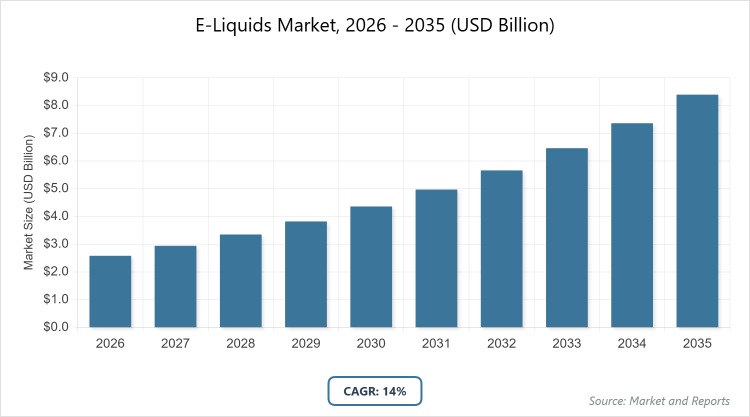
According to MarketnReports, the global E-Liquids market size was estimated at USD 2.58 billion in 2025 and is expected to reach USD 9.5 billion by 2035, growing at a CAGR of 14% from 2026 to 2035. E-Liquids Market is driven by increasing adoption of vaping as a safer alternative to traditional smoking.
What are the Key Insights for E-Liquids Market?
- The global E-Liquids market size was valued at USD 2.58 billion in 2025 and is projected to reach USD 9.5 billion by 2035.
- The market is expected to grow at a CAGR of 14% during the forecast period from 2026 to 2035.
- The market is driven by growing consumer preference for vaping as a safer alternative to traditional smoking, diverse flavor options, and innovations in product formulations.
- The tobacco flavor segment dominated with 31.7% share due to its appeal among smokers seeking a familiar taste mimicking traditional cigarettes while reducing exposure to harmful chemicals.
- The bottled type segment dominated with the highest revenue share due to its convenience for refilling, cost-effectiveness, and versatility for DIY customization.
- The retail store distribution channel dominated with the highest revenue share due to hands-on flavor sampling, expert advice, and unique in-store experiences.
- North America dominated with 39.5% share due to its established vaping culture, robust distribution networks, and supportive regulatory frameworks facilitating innovation and consumer adoption.
What is E-Liquids?
The E-Liquids market refers to the industry focused on producing and distributing liquids used in electronic cigarettes and vaping devices, which are vaporized to deliver nicotine, flavors, and other substances through inhalation without combustion. This market encompasses a range of formulations typically consisting of propylene glycol, vegetable glycerin, flavorings, and optional nicotine, serving as an alternative to traditional tobacco products by providing customizable experiences that appeal to users seeking reduced harm from smoking. It includes various product types designed for different devices, catering to diverse consumer preferences for taste, strength, and convenience, while navigating global regulations aimed at public health and youth protection.
What are the Market Dynamics for E-Liquids?
Growth Drivers
A growing number of consumers are shifting to vaping as a perceived safer alternative to traditional smoking, driven by increased awareness of the health risks associated with combustible tobacco products, such as exposure to tar and carcinogens. This transition is supported by public health campaigns and research from organizations like Johns Hopkins Medicine, which highlight that e-liquids deliver nicotine with fewer toxic substances. Manufacturers are innovating with a wide array of flavors, including traditional tobacco, refreshing menthol, and exotic fruits or desserts, attracting not only smokers but also non-smokers interested in recreational use. The expansion of online sales channels has made products more accessible, with convenient purchasing options and targeted digital marketing broadening the consumer base across demographics. Additionally, advancements in formulations like nicotine salts provide smoother experiences at higher strengths, enhancing user satisfaction and aiding smoking cessation efforts, while regulatory environments in key markets promote e-liquids as harm reduction tools.
Restraints
Regulatory variations across regions pose significant barriers, with restrictions on flavored products, advertising, and online sales limiting market accessibility and innovation, as seen in prohibitions in countries like China or flavor bans in parts of the U.S. Health concerns over long-term vaping effects, including potential respiratory issues or unknown risks from ingredients like propylene glycol, have led to public skepticism and stricter oversight, deterring potential users and prompting enforcement actions that reject non-compliant products. Ties to the tobacco industry bring additional scrutiny, including taxes and stigmas, while economic factors such as downturns reduce discretionary spending on non-essential items like premium e-liquids. Intense competition and market saturation further pressure pricing and margins, making it challenging for smaller players to sustain growth amid supply chain disruptions in raw materials.
Opportunities
Emerging markets in Asia-Pacific and Latin America present growth potential, with rising disposable incomes and awareness of smoking risks enabling expansion through e-commerce and localized products tailored to regional preferences. Innovations in sustainable formulations, such as water-based e-liquids that reduce harmful emissions and dehydration, along with synthetic nicotine options bypassing certain regulations, allow companies to differentiate and appeal to health-conscious consumers. Strategic partnerships and acquisitions, like those strengthening positions in heated tobacco and vaping, can enhance market share and distribution. Increasing demand for customizable, nicotine-free options opens niches for premium branding, while supportive harm reduction policies in regions like Europe encourage investment in compliant, transparent products that build consumer trust and drive adoption among diverse age groups.
Challenges
Navigating fragmented regulatory landscapes remains a core issue, with varying rules on nicotine levels, flavor approvals, and advertising requiring constant adaptation and raising compliance costs, as evidenced by FDA rejections of thousands of applications. Shifting consumer perceptions amid ongoing health debates and potential bans on disposables or flavors could erode demand, particularly if environmental concerns over waste lead to broader restrictions. Supply chain vulnerabilities in key manufacturing hubs like Asia-Pacific disrupt ingredient sourcing, while high competition demands ongoing innovation to avoid commoditization. Economic volatility and public health campaigns emphasizing vaping risks further complicate sustained expansion, especially in conservative markets where social stigmas or lack of infrastructure limit penetration.
E-Liquids Market: Report Scope
| Report Attributes | Report Details |
| Report Name | E-Liquids Market |
| Market Size 2025 | USD 2.58 Billion |
| Market Forecast 2035 | USD 9.5 Billion |
| Growth Rate | CAGR of 14% |
| Report Pages | 220 |
| Key Companies Covered |
Black Note, Inc., Turning Point Brands, Inc., Philip Morris International, Riot Labs, Elf Bar, and Others |
| Segments Covered | By Flavor, By Type, By Distribution Channel, and By Region |
| Regions Covered | North America, Europe, Asia Pacific (APAC), Latin America, and The Middle East and Africa (MEA) |
| Base Year | 2025 |
| Historical Year | 2020 – 2024 |
| Forecast Year | 2026 – 2035 |
| Customization Scope | Avail customized purchase options to meet your exact research needs. |
How is the E-Liquids Market Segmented?
The E-Liquids market is segmented by flavor, type, distribution channel, and region.
Based on Flavor Segment. The tobacco subsegment is the most dominant, holding over 30% share, as it caters to smokers transitioning from traditional cigarettes by offering a familiar taste and aiding cessation, which drives overall market growth through high consumer retention and perceived harm reduction. The menthol subsegment is the second most dominant, growing rapidly due to its refreshing and cooling effects that appeal to younger users and former menthol smokers, helping to expand the market by attracting new demographics with less harsh experiences and regulatory approvals for certain products.
Based on Type Segment. The bottled subsegment is the most dominant, valued for its cost-effectiveness, secure storage, and allowance for customization, which drives market growth by enabling regular vapers to engage more deeply and save on long-term use. The pre-filled subsegment is the second most dominant, preferred for its convenience, disposability, and low maintenance, contributing to market expansion by appealing to beginners and on-the-go users in fast-paced lifestyles.
Based on Distribution Channel Segment. The retail store subsegment is the most dominant, providing expert guidance, flavor sampling, and trust-building experiences in physical locations like tobacconists, which drives market growth through enhanced customer loyalty and impulse purchases. The online subsegment is the second most dominant, offering competitive pricing, wide variety, and accessibility, fueling expansion by reaching remote consumers and leveraging digital trends for broader adoption.
What are the Recent Developments in E-Liquids Market?
- In August 2024, Japan Tobacco Group acquired Vector Group for USD 2.4 billion, aiming to bolster its position in e-cigarettes and heated tobacco products, integrating resources to expand offerings in the U.S. market and enhance competitiveness in alternative smoking segments.
- In June 2023, Innokin launched the Aquios Bar, the first vaporizer with water-based e-liquids, improving user experience by minimizing emissions and dehydration, reflecting a focus on sustainability and technological progress in the vaping industry.
- In July 2025, Riot Labs introduced six new intense flavors in its Riot X range, such as Cherry Colada and Blue Razz Sour Watermelon, available in various nicotine strengths starting at GBP 3.99, targeting adult vapers with high-intensity options.
- In June 2024, URBAN TALE partnered with LOST MARY to enter the U.S. market with 12 nicotine salt flavors, focusing on bestselling global selections to appeal to adult consumers and strengthen distribution.
Which Region Dominates the E-Liquids Market?
North America to dominate the global market.
North America leads due to its mature vaping ecosystem, with the United States as the dominating country, where high adoption rates, innovative marketing, and regulations like FDA approvals for menthol products support growth among young adults transitioning from smoking, bolstered by strong online and retail networks.
Europe experiences steady expansion through harm reduction policies, with the United Kingdom dominating as the leading country, treating e-cigarettes akin to nicotine therapies, enhanced by specialized shops and flavor diversity despite restrictions, driving adoption in health-aware populations.
Asia Pacific is poised for the fastest growth, with China as the dominating country, home to over 300 million smokers seeking alternatives via branded physical stores from companies like Relx, despite online bans, fueled by rising incomes and awareness in urban areas.
Latin America shows emerging potential amid health campaigns, with Brazil as the dominating country, where increasing interest in vaping alternatives navigates regulatory challenges, supported by online channels and demographic shifts toward younger users.
The Middle East and Africa remain nascent, with the UAE dominating as the leading country, benefiting from regulated access in urban centers and growing acceptance, though limited by infrastructure and conservative policies.
Who are the Key Players in E-Liquids Market?
- Black Note, Inc. emphasizes premium, natural tobacco-flavored e-liquids free from artificial additives, focusing on transparency and quality to attract discerning users transitioning from smoking, building loyalty through authentic experiences and clean production methods.
- Turning Point Brands, Inc. distributes vaping products under its NewGen segment, adapting to preferences via innovation and acquisitions like Zig-Zag, strengthening presence by integrating e-liquids with alternative tobacco accessories for diversified growth.
- Philip Morris International invests in smoke-free products like IQOS, leveraging regulatory expertise and vertical integration to lead in compliant e-liquids, focusing on harm reduction claims to capture transitioning smokers globally.
- Riot Labs expands with intense flavor lines like Riot X, using patents and affordable pricing in various nicotine strengths to target adult segments, navigating restrictions through compliant, high-intensity innovations.
- Elf Bar dominates disposables with synthetic nicotine to bypass bans, employing global partnerships and convenience-focused strategies to expand in emerging markets while addressing environmental concerns.
What are the Current Trends in E-Liquids Market?
- Shift toward flavored and nicotine-free options amid regulatory bans and health preferences.
- Growth in small bottle sizes for compliance with limits like EU’s 10 ml for nicotine liquids.
- Rise of online channels with age verification for broader, convenient access.
- Innovations in synthetic nicotine and sustainable ingredients like bio-based propylene glycol.
- Increasing emphasis on transparent labeling to counter health concerns.
- Expansion into Asia-Pacific via taxation strategies over outright bans.
- Consolidation among compliant players following enforcement actions.
What Segments are Covered in the E-Liquids Market Report?
By Flavor
- Tobacco
- Menthol/Mint
- Fruits & Nuts
- Dessert/Sweet
- Beverage
- Candy
- Bakery
- Herbal/Botanical
- Chocolate
- Other Specialty Flavors
- Others
By Type
- Pre-filled
- Bottled
- Pods/Cartridges
- Others
By Distribution Channel
- Online
- Retail Stores
- Convenience Stores
- Drug Stores
- News Stands
- Tobacconist
- Specialty Stores
- Offline Stores
- Others
By Region
- North America
- U.S.
- Canada
- Europe
- UK
- Germany
- France
- Rest of Europe
- Asia Pacific
- China
- India
- Japan
- Rest of Asia Pacific
- Latin America
- Brazil
- Mexico
- Rest of Latin America
- Middle East & Africa
- UAE
- South Africa
- Rest of Middle East & Africa
Frequently Asked Questions
E-Liquids are flavored liquids used in electronic cigarettes and vaping devices, typically containing nicotine, propylene glycol, vegetable glycerin, and flavorings, serving as alternatives to traditional tobacco smoking.
Key factors include rising adoption of vaping as a harm reduction tool, flavor innovations, regulatory support in certain regions, expansion of online distribution, and technological advancements in formulations like nicotine salts.
The E-Liquids market is projected to grow from an estimated value post-2025 to USD 9.5 billion by 2035.
The CAGR is expected to be 14% during 2026-2035.
North America will contribute notably, holding the largest share due to its established vaping culture and distribution networks.
Major players include Black Note, Inc., Turning Point Brands, Inc., Philip Morris International, Riot Labs, and Elf Bar.
The report provides comprehensive analysis including market size, trends, segmentation, regional insights, key players, and forecasts from 2026 to 2035.
Stages include raw material sourcing (propylene glycol, flavorings), manufacturing and formulation, packaging, distribution through retail and online channels, and end-user consumption.
Trends are shifting toward sustainable, nicotine-free options with diverse flavors, while consumers prefer customizable, health-focused products amid regulatory changes.
Factors include flavor bans, nicotine limits, disposable restrictions for environmental reasons, and varying global regulations impacting product approval and marketing.