
Medical Tourism Market Size, Share and Trends 2026 to 2035
According to MarketnReports, the global Medical Tourism Market size was estimated at USD 48.40 billion in 2025 and is expected to reach USD 316.7 billion by 2035, growing at a CAGR of 21.9% from 2026 to 2035. Medical Tourism Market is driven by rising healthcare costs in developed countries and availability of affordable high-quality treatments abroad.What are the Key Insights into the Medical Tourism Market?
- The global Medical Tourism Market was valued at USD 48.40 billion in 2025 and is projected to reach USD 316.7 billion by 2035.
- The market is anticipated to grow at a CAGR of 21.9% during the forecast period from 2026 to 2035.
- The Medical Tourism Market is driven by cost-effective treatments, advanced medical facilities in emerging economies, and increasing global mobility for healthcare.
- In the Treatment Type segment, Cosmetic Treatment dominates with a 24% share due to high demand for affordable aesthetic procedures.
- In the Service Provider segment, Private holds the dominant position with a 55% share, as private facilities offer specialized and premium services.
- In the Traveler Type segment, Independent Traveler leads with a 60% share, driven by flexibility and personalized planning options.
- Asia Pacific dominates the regional landscape with a 46% share, attributed to low costs, high-quality care, and government support in countries like India and Thailand.
What is the Industry Overview of the Medical Tourism Market?
The Medical Tourism Market involves individuals traveling across international borders to access medical treatments, often combining healthcare with leisure activities. This market includes a range of services from elective procedures like cosmetic surgery to complex treatments such as organ transplants, driven by factors like cost savings, shorter wait times, and advanced medical technologies in destination countries. Market definition refers to the organized industry facilitating cross-border healthcare services, including hospitals, clinics, travel agencies, and insurance providers that cater to patients seeking quality care at competitive prices, while addressing cultural, logistical, and regulatory aspects to ensure safe and effective experiences.
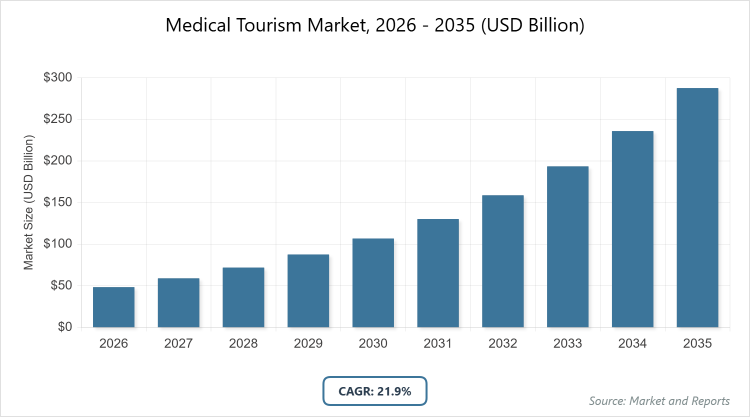
What are the Market Dynamics in the Medical Tourism Market?
Growth Drivers
The Medical Tourism Market is expanding rapidly due to escalating healthcare expenses in developed nations, prompting patients to seek affordable alternatives abroad without compromising quality. Advancements in medical technology and accreditation standards in destinations like Asia and Latin America enhance trust and accessibility. Improved global connectivity through air travel and digital platforms facilitates seamless planning and follow-up care. Additionally, government initiatives in host countries, such as visa relaxations and promotional campaigns, attract international patients, while the rise of wellness-integrated treatments appeals to health-conscious travelers seeking comprehensive care packages.
Restraints
Restraints in the Medical Tourism Market include concerns over varying healthcare standards and potential complications from treatments abroad, which can deter risk-averse patients. Language barriers and cultural differences may complicate communication and post-operative care. Legal and ethical issues, such as limited recourse for malpractice, add uncertainty. Moreover, travel disruptions from geopolitical tensions or health crises, like pandemics, can halt market growth, while inadequate insurance coverage for international procedures increases financial risks for patients.
Opportunities
Opportunities abound in the Medical Tourism Market with the integration of telemedicine for pre- and post-treatment consultations, enhancing patient confidence and continuity of care. Emerging destinations in Eastern Europe and Africa offer untapped potential with competitive pricing and unique specialties. Partnerships between airlines, hotels, and hospitals can create all-inclusive packages, appealing to wellness tourists. Furthermore, the growing demand for personalized medicine and regenerative therapies opens avenues for innovation, attracting high-value patients seeking cutting-edge treatments.
Challenges
Challenges in the Medical Tourism Market encompass ensuring consistent quality and safety across diverse regulatory environments, which requires robust international accreditations. Managing patient expectations amid varying recovery experiences and potential complications demands comprehensive support systems. Economic fluctuations can affect affordability and travel willingness. Additionally, competition among destinations necessitates continuous investment in infrastructure and marketing, while addressing ethical concerns like organ tourism is crucial for sustainable growth.
Medical Tourism Market: Report Scope
| Report Attributes | Report Details |
| Report Name | Medical Tourism Market |
| Market Size 2025 | USD 48.40 Billion |
| Market Forecast 2035 | USD 316.7 Billion |
| Growth Rate | CAGR of 21.9% |
| Report Pages | 220 |
| Key Companies Covered |
Apollo Hospitals Enterprise Ltd., Bumrungrad International Hospital, Bangkok Hospital, KPJ Healthcare Berhad, Fortis Healthcare, Asklepios Kliniken GmbH & Co., Clemenceau Medical Center, Asian Heart Institute, Prince Court Medical Centre, Raffles Medical Group, and Others. |
| Segments Covered | By Treatment Type, By Service Provider, By Traveler Type, and By Region. |
| Regions Covered | North America, Europe, Asia Pacific (APAC), Latin America, and The Middle East and Africa (MEA) |
| Base Year | 2025 |
| Historical Year | 2020 - 2024 |
| Forecast Year | 2026 - 2035 |
| Customization Scope | Avail customized purchase options to meet your exact research needs. |
What is the Market Segmentation in the Medical Tourism Market?
The Medical Tourism Market is segmented by Treatment Type, Service Provider, Traveler Type, and region.By Treatment Type Segment, the market is divided into Cosmetic Treatment, Dental Treatment, Cardiovascular Treatment, Orthopedic Treatment, Fertility Treatment, Cancer Treatment, Neurological Treatment, Bariatric Treatment, Ophthalmic Treatment, Alternative Medicine, and Others. Cosmetic Treatment emerges as the most dominant subsegment, commanding a significant share due to its elective nature and substantial cost savings abroad, while Dental Treatment is the second most dominant, popular for quick and affordable procedures. The dominance of Cosmetic Treatment drives the market by attracting a large volume of patients seeking aesthetic enhancements, boosting revenue for destinations and encouraging investments in specialized facilities.
By Service Provider Segment, the market includes Private and Public. Private dominates this segment owing to its focus on premium, efficient services with modern infrastructure, with Public as the second dominant, offering cost-effective options in government-supported systems. This dominance helps propel the market as Private providers innovate with patient-centric models, enhancing overall attractiveness and competitiveness of medical tourism hubs.
By Traveler Type Segment, the market covers Independent Traveler, Tour Group, Package Traveler, and Others. Independent Traveler is the most dominant, fueled by digital tools enabling self-planned trips, followed by Package Traveler as the second dominant, preferring all-inclusive arrangements. The leading position of Independent Traveler drives market growth by increasing accessibility through online platforms, expanding reach to diverse demographics.
By Region Segment, the market is analyzed across North America, Europe, Asia Pacific, Latin America, and Middle East & Africa. Asia Pacific leads, supported by affordable high-quality care, with Latin America as the second dominant, known for cosmetic and dental specialties. Asia Pacific's dominance accelerates market expansion through volume-driven economies and strategic promotions.
What are the Recent Developments in the Medical Tourism Market?
- In June 2025, MIOT Hospital launched the Tibia Nail Advanced System for treating tibial fractures, marking the first such implementation in India and enhancing orthopedic offerings for international patients.
- In March 2025, Shanghai Renji Hospital and Singapore’s Raffles Medical Group signed a strategic collaboration agreement to establish a dual circulation service system, boosting medical tourism through integrated resources and aligned with national health plans.
- In September 2024, EaseMyTrip.com acquired a 49% stake in Pflege Home Healthcare and 30% in Rollins International, entering the medical tourism sector to provide comprehensive healthcare travel solutions.
- In September 2024, the Dubai Health Authority and Dubai Department of Economy and Tourism signed an MoU to promote medical tourism in Dubai by ensuring quality services and transparency.
What is the Regional Analysis of the Medical Tourism Market?
Asia Pacific to dominate the global market.Asia Pacific commands the largest share in the Medical Tourism Market, driven by cost-effective treatments, advanced facilities, and supportive government policies. Thailand and India dominate this region, with Thailand leading due to its world-class hospitals and wellness integrations, attracting over 2 million patients annually. India's dominance stems from skilled professionals and low costs, particularly in cardiac and orthopedic procedures.
Europe maintains a strong position, focusing on high-quality specialized care and spa-integrated wellness. Germany and Turkey lead, with Turkey prominent for cosmetic and hair transplants due to competitive pricing. Germany's advanced technology in oncology draws patients seeking precision medicine.
North America is significant for outbound tourism but growing in inbound, emphasizing innovation. The United States dominates, with hubs like Miami attracting Latin American patients for oncology and cardiology through renowned institutions.
Latin America exhibits growth potential, led by Mexico and Brazil. Mexico excels in dental and cosmetic treatments for U.S. patients, benefiting from proximity and affordability.
The Middle East & Africa region is emerging, with the UAE and South Africa at the forefront. The UAE leads through Dubai's luxury healthcare and visa facilitations for medical visitors.
Who are the Key Market Players in the Medical Tourism Market?
Apollo Hospitals Enterprise Ltd. focuses on expanding international patient services through accreditations and partnerships, emphasizing advanced treatments in cardiology and oncology.
Bumrungrad International Hospital employs digital marketing and multilingual support strategies to attract global patients, specializing in comprehensive check-ups and minimally invasive surgeries.
Bangkok Hospital prioritizes wellness packages integrated with tourism, leveraging Thailand's appeal for post-treatment recovery.
KPJ Healthcare Berhad adopts cost-competitive strategies with JCI-accredited facilities, targeting Middle Eastern and Asian markets for orthopedic care.
Fortis Healthcare invests in telemedicine for follow-up care, focusing on multi-specialty treatments to retain international clientele.
Asklepios Kliniken GmbH & Co. leverages European quality standards, strategizing around specialized clinics for neurology and rehabilitation.
Clemenceau Medical Center emphasizes luxury hospitality combined with advanced diagnostics, targeting high-end medical tourists.
Asian Heart Institute specializes in cardiac care, using research collaborations to enhance global reputation.
Prince Court Medical Centre focuses on personalized patient experiences, with strategies in fertility and cosmetic procedures.
Raffles Medical Group integrates primary care with tourism, strategizing regional expansions for comprehensive health services.
What are the Market Trends in the Medical Tourism Market?
- Rise of wellness-integrated medical tourism combining treatments with spa and relaxation services.
- Adoption of telemedicine for pre- and post-treatment consultations enhancing patient trust.
- Growth in regenerative medicine and stem cell therapies attracting patients for innovative care.
- Emphasis on sustainable and ethical practices in destination healthcare facilities.
- Increasing use of AI for personalized treatment planning and risk assessment.
- Expansion of insurance coverage for international medical procedures.
- Focus on post-pandemic safety protocols including health certifications.
- Surge in cosmetic and dental tourism driven by social media influence.
- Partnerships between airlines and hospitals for seamless travel packages.
- Emergence of niche markets like fertility and cancer treatments in specialized hubs.
What Market Segments and their Subsegments are Covered in the Medical Tourism Market Report?
By Treatment Type
- Cosmetic Treatment
- Dental Treatment
- Cardiovascular Treatment
- Orthopedic Treatment
- Fertility Treatment
- Cancer Treatment
- Neurological Treatment
- Bariatric Treatment
- Ophthalmic Treatment
- Alternative Medicine
- Others
By Service Provider
- Private
- Public
By Traveler Type
- Independent Traveler
- Tour Group
- Package Traveler
- Others
By Region
- North America
- U.S.
- Canada
- Europe
- UK
- Germany
- France
- Rest of Europe
- Asia Pacific
- China
- India
- Japan
- Rest of Asia Pacific
- Latin America
- Brazil
- Mexico
- Rest of Latin America
- Middle East & Africa
- UAE
- South Africa
- Rest of Middle East & Africa
Frequently Asked Questions
The Medical Tourism Market encompasses travel for medical treatments abroad, including services from hospitals, facilitators, and related industries focusing on cost-effective, high-quality care.
Key factors include rising healthcare costs, technological advancements, government promotions, and demand for specialized treatments.
The market is projected to grow from USD 48.40 billion in 2026 to USD 316.7 billion by 2035.
The CAGR is expected to be 21.9% during 2026-2035.
Asia Pacific will contribute notably, holding around 46% of the market share due to affordable and advanced healthcare.
Major players include Apollo Hospitals Enterprise Ltd., Bumrungrad International Hospital, Bangkok Hospital, KPJ Healthcare Berhad, Fortis Healthcare, Asklepios Kliniken GmbH & Co., Clemenceau Medical Center, Asian Heart Institute, Prince Court Medical Centre, and Raffles Medical Group.
The report offers analysis of market size, trends, segments, key players, regional insights, and forecasts from 2026 to 2035.
Stages include patient consultation, travel arrangement, treatment delivery, recovery support, and follow-up care.
Trends favor wellness integration and digital tools, with preferences shifting toward personalized, sustainable healthcare experiences.
Factors include international accreditations for quality assurance and visa policies facilitating medical travel.