
Yeast Market Size, Share and Trends 2026 to 2035
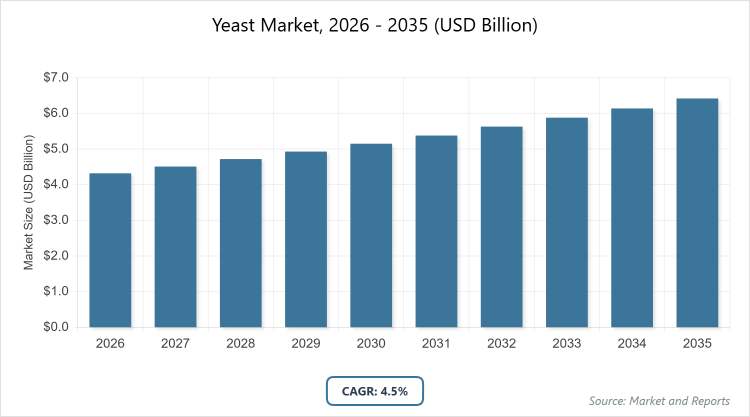
According to MarketnReports, the global Yeast market size was estimated at USD 4.32 billion in 2025 and is expected to reach USD 6.69 billion by 2035, growing at a CAGR of 4.5% from 2026 to 2035. Yeast Market is driven by rising global demand for baked goods and fermented products.
What are the Key Insights for Yeast Market?
- The global yeast market was valued at USD 4.32 billion in 2025 and is expected to reach USD 6.69 billion by 2035.
- Growing at a CAGR of 4.5% during the forecast period 2026-2035.
- The market is driven by rising global demand for baked goods and fermented products.
- Dominated subsegment in Type: Dry Yeast with 58% share, why it is dominated: preferred for convenience, longer shelf life, and ease of storage and distribution in large-scale commercial operations.
- Dominated subsegment in Application: Bake with 45% share, why it is dominated: encompasses essential leavening and texture development in bread and baked goods, driving recurring demand in both commercial and artisanal settings.
- Dominated subsegment in End-Use: Food & Beverages with 70% share, why it is dominated: yeast's core role in fermentation and flavor enhancement aligns with expanding consumer demand for processed foods, alcoholic drinks, and bakery items.
- Dominated region: Asia-Pacific with 34% share, why it is dominated: fueled by urbanization, Westernized diets, rising incomes, and bakery chain expansion in populous countries like China and India.
What is the Yeast Industry Overview?
The yeast market refers to the global industry involved in the production, distribution, and utilization of yeast, a single-celled fungus primarily from the Saccharomyces cerevisiae species, which plays a critical role in fermentation processes. This market encompasses various forms and types of yeast used across multiple sectors, including food and beverages for leavening and flavor enhancement, biotechnology for biofuel production, and nutrition for health supplements. The market definition includes natural and engineered yeast strains that facilitate metabolic activities like converting sugars into alcohol and carbon dioxide, making it essential for traditional applications such as baking and brewing, as well as modern innovations in sustainable protein alternatives and pharmaceuticals. It is characterized by its versatility, with demand stemming from both consumer preferences for natural ingredients and industrial needs for efficient bioprocessing.
What are the Yeast Market Dynamics?
Growth Drivers
The yeast market is propelled by increasing consumer demand for natural and clean-label products, as yeast serves as a vital ingredient in organic baking, brewing, and functional foods without synthetic additives. Advancements in biotechnology have enabled the development of specialized yeast strains that enhance efficiency in bioethanol production and pharmaceutical applications, supporting sustainability goals amid rising energy needs. Expanding bakery and beverage industries in emerging economies, coupled with urbanization and changing lifestyles, further boost consumption of yeast-leavened products like bread, beer, and wine. Additionally, the growing awareness of yeast's nutritional benefits, such as providing B vitamins and proteins in vegan diets, drives its adoption in health-oriented supplements and animal feed, fostering market expansion.
Restraints
Volatility in raw material prices, particularly molasses and sugars derived from agricultural sources, poses a significant restraint, as fluctuations due to weather conditions, trade policies, and supply chain disruptions increase production costs and impact profitability for manufacturers. Energy-intensive fermentation and drying processes add to operational expenses, especially in regions with high electricity prices or limited access to renewable energy, challenging smaller players in maintaining competitive pricing. Regulatory hurdles related to genetically modified yeast strains and food safety standards vary across regions, potentially delaying product launches and limiting market entry for innovative applications. Competition from alternative leavening agents, such as chemical baking powders, in cost-sensitive segments also hinders yeast's penetration in certain processed food categories.
Opportunities
Opportunities abound in the expanding health and wellness sector, where nutritional and probiotic yeast variants can be leveraged for vegan protein alternatives, dietary supplements, and functional foods rich in bioactive compounds like beta-glucans for immune support. Investments in sustainable production technologies, including closed-loop systems and renewable substrates, align with global environmental goals and open avenues for eco-friendly yeast products in biofuels and bioplastics. Emerging markets in Asia-Pacific and Latin America present growth potential through localized manufacturing and customized strains for regional cuisines, such as fermented beverages and steamed breads. Collaborations between yeast producers and biotechnology firms could accelerate innovations in precision fermentation, enabling novel applications in pharmaceuticals and personalized nutrition to capture untapped demand.
Challenges
Intense competition from multinational corporations with economies of scale makes it difficult for smaller producers to compete on price and innovation, particularly in mature markets like Europe and North America where brand loyalty is strong. Supply chain vulnerabilities, including reliance on imported raw materials and disruptions from geopolitical events or pandemics, threaten consistent production and distribution. Evolving consumer preferences toward low-carb or gluten-free diets may reduce demand for traditional yeast-based baked goods, requiring adaptation to alternative formulations. Environmental concerns over water usage and waste in yeast production processes challenge compliance with stringent sustainability regulations, potentially increasing costs for upgrades to greener technologies.
Yeast Market: Report Scope
| Report Attributes | Report Details |
| Report Name | Yeast Market |
| Market Size 2025 | USD 4.32 Billion |
| Market Forecast 2035 | USD 6.69 Billion |
| Growth Rate | CAGR of 4.5% |
| Report Pages | 220 |
| Key Companies Covered | Lesaffre, AB Mauri, AngelYeast, and Others |
| Segments Covered | By Type (Fresh Yeast, Dry Yeast), By Application (Bake, Pastry, Wine, Others), By End-User (Food & Beverages, Animal Feed, Biofuels, Pharmaceuticals, Others), and By Region |
| Regions Covered | North America, Europe, Asia Pacific (APAC), Latin America, and The Middle East and Africa (MEA) |
| Base Year | 2025 |
| Historical Year | 2020 - 2024 |
| Forecast Year | 2026 - 2035 |
| Customization Scope | Avail customized purchase options to meet your exact research needs. |
The Yeast market is segmented by type, application, end-user, and region.
Based on Type Segment. The dry yeast subsegment dominates with a 58% share, as it offers extended shelf life, ease of transportation, and versatility in industrial baking applications, driving market growth by enabling efficient scaling in commercial operations and reducing waste from spoilage. The fresh yeast subsegment follows as the second most dominant with 42%, valued for its superior fermentation performance and flavor enhancement in artisanal and premium bakery products, contributing to market expansion through demand from high-end foodservice and home baking enthusiasts seeking authentic textures.
Based on Application Segment. The bake subsegment leads with 45% share, driven by its essential role in leavening bread and baked goods amid rising global consumption of convenience foods, propelling overall market growth via consistent demand from retail and industrial bakeries. The pastry subsegment is second dominant at 22%, benefiting from yeast's ability to create flaky layers and soft crumbs in products like croissants, supporting market advancement through innovation in frozen and ready-to-bake formats for busy consumers.
Based on End-User Segment. The food & beverages end-user dominates with 70% share, fueled by yeast's integral use in fermentation for beers, wines, and baked items, accelerating market growth as consumer preferences shift toward natural and flavored products in expanding urban populations. The feed end-user is second dominant at 15%, leveraging yeast's nutritional profile for animal health and growth promotion, aiding market progress through sustainable feed solutions in livestock farming amid rising protein demand.
What are the Recent Developments in Yeast Market?
- Major manufacturers expanded production capacity in Asia-Pacific to reduce import dependency and improve distribution resilience, focusing on localized facilities to meet rising demand for dry yeast in bakery chains.
- Introduction of new nutritional yeast formulations for vegan foods, plant-based meat analogs, and dietary supplements, emphasizing fortified strains with enhanced B vitamins to cater to health-conscious consumers.
- Investments in bioethanol fermentation yeast strains optimized for higher yield under industrial stress conditions, supporting sustainable energy initiatives and reducing production costs for biofuel producers.
- Launch of specialty wine and craft beer yeast strains for enhanced flavor control and fermentation tolerance, enabling wineries and breweries to differentiate products in competitive markets.
- Formation of joint ventures between biotechnology firms and yeast producers for functional yeast derivatives in pharmaceuticals and healthcare nutrition, accelerating R&D for probiotic and antioxidant applications.
What is the Yeast Regional Analysis?
Asia Pacific to dominate the global market.
Asia-Pacific holds the largest share at 34%, driven by rapid urbanization, increasing disposable incomes, and the expansion of bakery and beverage industries in countries like China, which dominates with 16% of the regional market due to its massive consumer base for steamed breads, fermented drinks, and bioethanol production. The region's growth is further supported by local manufacturing investments and adoption of Western diets, enhancing yeast demand in food processing and industrial applications.
Europe accounts for 32%, with strong traditions in artisan baking, wine, and beer production; Germany leads with 7% of the regional share, bolstered by its diverse bread culture and focus on high-performing, clean-label yeast strains under strict EU regulations promoting natural ingredients and sustainability.
North America represents 28%, fueled by industrialized food sectors and craft brewing; the United States dominates, emphasizing nutritional yeast in plant-based foods and bioethanol facilities, with high per-capita consumption of snacks and beverages driving innovation in functional products.
Middle East & Africa holds 10%, supported by urban growth and yeast-leavened breads in local cuisines; South Africa leads, relying on dry yeast formats suited to warm climates, with opportunities in food security through expanded retail bakeries and animal feed additives.
Latin America contributes modestly, with Brazil leading through its bakery and biofuel sectors, where yeast aids in ethanol production from sugarcane, benefiting from agricultural abundance and rising demand for processed foods in growing urban centers.
Who are the Key Yeast Market Players?
- Lesaffre employs strategies focused on innovation in specialty yeast strains and sustainable production, including investments in R&D for probiotic and biofuel applications to maintain its 24% market share through global expansion and partnerships.
- AB Mauri leverages economies of scale in dry yeast manufacturing, emphasizing supply chain optimization and customized solutions for industrial bakers, securing its 18% share via acquisitions and digital fermentation technologies.
- AngelYeast prioritizes cost-effective production in Asia, with strategies centered on vertical integration of raw materials and export growth, enhancing its position through high-volume supply to emerging markets.
- Lallemand Inc focuses on diversified applications in wine and feed, using R&D for strain enhancement and sustainability initiatives to drive growth in health-oriented segments.
- Pakmaya adopts localization strategies in Europe and Middle East, emphasizing quality control and affordable dry yeast variants to capture share in bakery and pastry sectors.
- Chr. Hansen integrates biotechnology for functional yeast derivatives, with strategies in clean-label and nutritional products to expand in pharmaceuticals and vegan markets.
- Xinghe Yeast targets bioethanol and feed applications in China, employing cost-leadership and government-backed sustainability efforts to grow domestically.
- Mitsubishi utilizes advanced fermentation tech for industrial uses, focusing on partnerships for biofuel innovation to strengthen its niche in Asia-Pacific.
- Jiuding Yeast emphasizes export-oriented strategies for nutritional yeast, investing in quality certifications to penetrate health food markets globally.
- Biorigin specializes in yeast extracts for flavor enhancement, with sustainability-focused strategies like waste valorization to appeal to clean-label food producers.
What are the Yeast Market Trends?
- Shift toward specialized yeast strains for enhanced performance, nutritional benefits, and product differentiation in automated baking systems.
- Growing demand for dry yeast in industrial applications due to shelf life advantages and global supply chain efficiency.
- Advancements in fermentation technology for craft brewing, bioethanol, and specialty beverages with focus on strain robustness.
- Emphasis on sustainable production methods to reduce environmental footprint in key regions like Europe and North America.
- Rise in nutritional and clean-label products, including fortified yeast for vegan and health-oriented applications.
What are the Market Segments and their Subsegments Covered in the Yeast Report?
By Type
-
Fresh Yeast
-
Dry Yeast
By Application
- Bake
- Pastry
- Wine
- Others
By End-User
- Food & Beverages
- Animal Feed
- Biofuels
- Pharmaceuticals
- Others
By Region
- North America
- U.S.
- Canada
- Europe
- UK
- Germany
- France
- Rest of Europe
- Asia Pacific
- China
- India
- Japan
- Rest of Asia Pacific
- Latin America
- Brazil
- Mexico
- Rest of Latin America
- Middle East & Africa
- UAE
- South Africa
- Rest of Middle East & Africa
Frequently Asked Questions
Yeast refers to single-celled fungi, primarily Saccharomyces cerevisiae, used in fermentation for leavening, flavoring, and metabolic processes across food, beverage, and industrial applications.
Key factors include rising demand for baked goods, advancements in biotechnology for biofuels, consumer preference for natural ingredients, and expansion in emerging markets like Asia-Pacific.
The yeast market is projected to grow from USD 4.52 billion in 2026 to USD 6.69 billion by 2035.
The CAGR is expected to be 4.5% during 2026-2035.
Asia-Pacific will contribute notably, holding 34% share due to urbanization and bakery growth.
Major players include Lesaffre, AB Mauri, AngelYeast, Lallemand Inc, and Pakmaya.
The report provides in-depth analysis of market size, segments, drivers, restraints, regional insights, key players, trends, and forecasts.
Stages include raw material sourcing (molasses, sugars), fermentation processing, drying and packaging, distribution, and end-use applications in food, feed, and biofuels.
Trends show a shift toward sustainable, nutritional yeast strains, with consumers preferring clean-label, vegan-friendly products and specialized variants for health benefits.
Strict regulations on GMOs and food safety, plus environmental pressures for reduced water and energy use in production, influence growth by promoting sustainable practices.