
Pain Management Therapeutics Market Size, Share, and Forecast 2026 to 2035
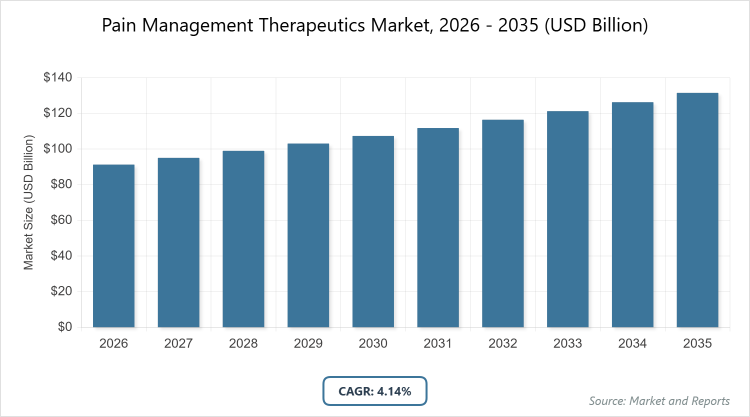
According to our latest research, the global pain management therapeutics market is projected to grow from approximately USD 91.3 billion in 2026 to USD 131.61 billion by 2035, growing at a CAGR is estimated at 4.14% during 2026-2035. The Pain Management Therapeutics Market is primarily driven by the surging global prevalence of chronic diseases and the urgent clinical shift toward non-opioid alternatives, fueled by an aging population susceptible to musculoskeletal disorders and a regulatory crackdown on traditional opioid prescriptions.
What are the Key Insights into the Pain Management Therapeutics Market?
- Global market value projected to reach USD 131.61 billion by 2035 from approximately USD 91.3 billion in 2026 (extrapolated from 2025 value with CAGR).
- Compound Annual Growth Rate (CAGR) estimated at 4.14% during 2026-2035.
- Opioids dominate the drug class segment.
- Chronic pain dominates the pain type segment.
- Hospital pharmacies dominate the distribution segment.
- North America dominates the regional market.
What is the Pain Management Therapeutics Market?
Industry Overview
The pain management therapeutics market encompasses pharmaceutical products and treatments designed to alleviate acute and chronic pain through various mechanisms, including analgesics, anti-inflammatory drugs, opioids, anticonvulsants, and antidepressants, targeting conditions such as neuropathic pain, cancer pain, arthritis, and postoperative discomfort. This market serves healthcare providers, hospitals, and patients seeking effective pain relief with minimal side effects, integrating traditional drugs with innovative therapies like biologics and neuromodulation to improve quality of life and reduce dependency on opioids. It operates within the broader pharmaceutical sector, driven by rising chronic disease prevalence, aging populations, and advancements in drug delivery systems for targeted therapy, while addressing challenges in safety, addiction risks, and regulatory approvals.
The market emphasizes research for non-opioid alternatives and personalized medicine, supported by collaborations between pharma companies and research institutions to develop safer, more efficacious solutions in a global healthcare landscape focused on patient-centric care and cost-effectiveness.
What are the Market Dynamics in the Pain Management Therapeutics Market?
Growth Drivers
The pain management therapeutics market is propelled by the rising prevalence of chronic diseases such as arthritis, cancer, and neuropathic disorders, which increase demand for effective treatments like non-opioid analgesics and biologics, alongside advancements in drug development, including targeted therapies and sustained-release formulations that enhance efficacy and reduce side effects. Government initiatives and healthcare policies promoting opioid alternatives amid the opioid crisis drive innovation in safer options, while an aging global population and post-surgical care needs boost market expansion. Investments in R&D for personalized medicine and the integration of AI in pain assessment further accelerate growth, supported by expanding access in emerging markets through improved healthcare infrastructure.
Restraints
Restraints in the pain management therapeutics market include stringent regulatory approvals for new drugs, particularly opioids, due to addiction risks, which delay product launches and increase development costs, compounded by high prices of advanced biologics and targeted therapies that limit accessibility in low-income regions. Side effects associated with long-term use, such as gastrointestinal issues from NSAIDs or dependency from opioids, erode patient compliance, while patent expirations lead to generic competition, reducing revenues for branded drugs. Additionally, limited reimbursement policies in some countries hinder the adoption of innovative treatments.
Opportunities
Opportunities lie in the development of non-opioid alternatives like cannabinoids and neuromodulators, aligning with regulatory shifts away from opioids, while digital health integrations such as AI-driven pain management apps open avenues for combination therapies. Emerging markets in Asia offer growth through rising healthcare spending and chronic disease prevalence, supported by partnerships for localized production. Innovations in gene therapy and regenerative medicine for chronic pain provide high-value segments, fostering collaborations with biotech firms.
Challenges
Challenges include managing opioid addiction risks that require constant monitoring and alternative research, alongside high R&D costs for novel therapies with uncertain approval outcomes. Regulatory variations across regions complicate global launches, while counterfeit drugs in emerging markets undermine trust. Patient adherence issues due to side effects and competition from over-the-counter remedies add complexity, necessitating robust clinical evidence and marketing strategies.
Pain Management Therapeutics Market: Report Scope
| Report Attributes | Report Details |
| Report Name | Pain Management Therapeutics Market |
| Market Size 2025 | USD 91.3 Billion |
| Market Forecast 2035 | USD 131.61 Billion |
| Growth Rate | CAGR of 4.14% |
| Report Pages | 220 |
| Key Companies Covered | Pfizer, Novartis, Johnson & Johnson, Eli Lilly, Teva Pharmaceutical |
| Segments Covered | By Drug Class, By Pain Type, By Distribution, By Region |
| Regions Covered | North America, Europe, Asia Pacific (APAC), Latin America, The Middle East and Africa (MEA) |
| Base Year | 2025 |
| Historical Year | 2020 – 2024 |
| Forecast Year | 2026 – 2035 |
| Customization Scope | Avail customized purchase options to meet your exact research needs. |
What is the Market Segmentation Analysis for the Pain Management Therapeutics Market?
The pain management therapeutics market is segmented by drug class, pain type, distribution, and region.
By drug class segment, opioids emerge as the most dominant subsegment, followed by NSAIDs as the second most dominant. Opioids lead due to their potent efficacy in managing severe chronic and cancer pain, driven by high prescription rates in regions with advanced healthcare; this dominance drives the market by addressing unmet needs in acute pain relief, attracting R&D for abuse-deterrent formulations, and enabling revenue through controlled-release products that improve patient compliance, thereby expanding access in palliative care and boosting overall growth amid regulatory oversight. NSAIDs, as the second dominant, offer anti-inflammatory benefits for arthritis, contributing through over-the-counter availability.
By pain type segment, Chronic pain is the most dominant subsegment in the pain type segment, followed by acute pain as the second most dominant. Chronic pain dominates owing to rising incidences of arthritis and neuropathy in aging populations, requiring long-term therapies like anticonvulsants; this leadership propels the market by generating sustained demand for innovative drugs, fostering research in biologics, and enabling personalized treatments that reduce healthcare costs, thus driving expansion through increased patient pools. Acute pain, for postoperative care, is treated with short-term analgesics.
By distribution segment, Hospital pharmacies are the most dominant subsegment in the distribution segment, followed by retail pharmacies as the second most dominant. Hospital pharmacies dominate due to their role in dispensing controlled substances like opioids for inpatient care; this position drives the market by ensuring compliance, facilitating bulk purchases, and supporting clinical trials, thus increasing revenue through specialized services. Retail pharmacies contribute through OTC access for mild pain relief.
What are the Recent Developments in the Pain Management Therapeutics Market?
- In July 2025, Pfizer launched a new non-opioid analgesic for chronic pain, incorporating extended-release technology to improve patient adherence and reduce side effects, targeting the US market amid the opioid crisis.
- In September 2025, Novartis acquired a biotech firm specializing in neuromodulation therapies, aiming to expand its portfolio in neuropathic pain treatments for European markets.
What is the Regional Analysis of the Pain Management Therapeutics Market?
- North America to dominate the market
North America holds the largest share in the pain management therapeutics market, driven by high chronic disease prevalence, advanced healthcare infrastructure, and strong R&D investments; the United States dominates this region with its FDA approvals for innovative drugs and high opioid prescription rates, supported by initiatives to combat the opioid epidemic through non-opioid alternatives, while Canada contributes through universal healthcare access to pain therapies.
Europe maintains steady growth with emphasis on non-opioid treatments, where Germany leads through pharmaceutical giants like Bayer, focusing on arthritis and cancer pain management under EU regulations.
Asia Pacific is the fastest-growing region, propelled by aging populations; China dominates with increasing access to generics and biologics amid healthcare reforms.
Who are the Key Market Players and Strategies in the Pain Management Therapeutics Market?
- Pfizer focuses on non-opioid innovations and acquisitions for chronic pain therapies, expanding in North America.
- Novartis prioritizes biologics and neuromodulation, investing in R&D for neuropathic pain.
- Johnson & Johnson leverages analgesics like Tylenol, targeting acute pain with marketing campaigns.
- Eli Lilly adopts personalized medicine strategies, partnering for antidepressant-based pain relief.
- Teva Pharmaceutical concentrates on generics, expanding access in emerging markets.
What are the Market Trends in the Pain Management Therapeutics Market?
- Shift toward non-opioid alternatives like cannabinoids and biologics to address addiction risks.
- Growth in personalized therapies using AI for targeted drug delivery.
- Rise in neuromodulation devices for chronic pain management.
- Expansion of generics to improve affordability in emerging markets.
- Focus on sustained-release formulations for better compliance.
What Market Segments are Covered in the Report in Vertical format?
By Drug Class
- Opioids
- NSAIDs
- Anesthetics
- Anticonvulsants
- Antidepressants
- Others
By Pain Type
- Chronic Pain
- Acute Pain
By Distribution
- Hospital Pharmacies
- Retail Pharmacies
- Online Pharmacies
By Region
- North America
- U.S.
- Canada
- Europe
- UK
- Germany
- France
- Rest of Europe
- Asia Pacific
- China
- India
- Japan
- Rest of Asia Pacific
- Latin America
- Brazil
- Mexico
- Rest of Latin America
- Middle East & Africa
- UAE
- South Africa
- Rest of Middle East & Africa
Chapter 1. Preface
Chapter 2. Executive Summary
Chapter 3. Global Pain Management Therapeutics Market - Industry Analysis
Chapter 4. Global Pain Management Therapeutics Market- Competitive Landscape
Chapter 5. Global Pain Management Therapeutics Market - Drug Class Analysis
Chapter 6. Global Pain Management Therapeutics Market - Pain Type Analysis
Chapter 7. Global Pain Management Therapeutics Market - Distribution Analysis
Chapter 8. Pain Management Therapeutics Market - Regional Analysis
Chapter 9. Company Profiles
Frequently Asked Questions
Pain management therapeutics are pharmaceutical drugs and treatments used to alleviate acute or chronic pain, including analgesics, anti-inflammatories, and opioids, targeting conditions like arthritis and cancer.
Key factors include rising chronic diseases, non-opioid innovations, aging populations, regulatory shifts from opioids, and R&D in personalized medicine.
The market is projected to grow from approximately USD 91.3 billion in 2026 to USD 131.61 billion by 2035.
The CAGR is estimated at 4.14% during 2026-2035.
North America will contribute notably, holding the largest share due to advanced healthcare and high disease prevalence.
Major players include Pfizer, Novartis, Johnson & Johnson, Eli Lilly, Teva Pharmaceutical.
The report provides comprehensive insights into market size, forecasts, segmentation, regional analysis, key players, trends, dynamics, and developments.
The value chain includes R&D for drug discovery, clinical trials, manufacturing, distribution through pharmacies, and patient administration with monitoring.
Trends are evolving toward non-opioid and personalized therapies, with consumers preferring safer, effective options with fewer side effects.
Regulatory factors include opioid restrictions and approval processes, while environmental factors involve sustainable manufacturing to reduce pharmaceutical waste.