
Anti-Aging Market Size, Share and Trends 2026 to 2035
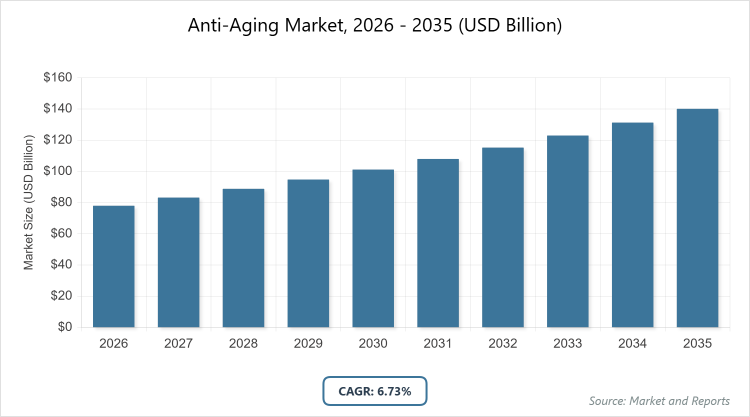
According to MarketnReports, the global Anti-Aging market size was estimated at USD 77.96 billion in 2025 and is expected to reach USD 149.54 billion by 2035, growing at a CAGR of 6.73% from 2026 to 2035. Anti-Aging Market is driven by a rapidly aging global population coupled with increasing societal pressure and personal desire to maintain a youthful appearance, further fueled by continuous advancements in highly effective skincare formulations and non-invasive aesthetic procedures.
What are the Key Insights into the Anti-Aging Market?
- Global anti-aging market valued at approximately USD 77.96 billion in 2025, projected to reach USD 149.54 billion by 2035.
- Expected CAGR of around 6.73% from 2026 to 2035, driven by aging demographics and technological innovations.
- Dominant subsegment by product: Skincare products, accounting for the largest share due to widespread consumer use.
- Dominant subsegment by application: Anti-wrinkle, holding over 40% market share for visible aging concerns.
- Dominant subsegment by distribution channel: Retail & online pharmacies, contributing around 50% revenue for convenience.
- Dominant region: Asia-Pacific, contributing over 35% of global revenue with China as the leading country.
What is the Anti-Aging Industry Overview?
Industry Overview
The anti-aging market encompasses a broad spectrum of products, services, and technologies designed to mitigate the visible and physiological effects of aging, including skincare formulations, cosmetic procedures, nutritional supplements, and advanced therapies aimed at promoting youthful appearance, vitality, and longevity. This market addresses consumer desires to combat signs like wrinkles, sagging skin, age spots, and reduced cellular function through topical creams, injectables like Botox, laser treatments, hormone therapies, and genetic interventions, drawing from dermatology, biotechnology, and wellness sectors to offer preventive, corrective, and regenerative solutions.
Anti-aging products are typically categorized by active ingredients such as retinoids, peptides, antioxidants, and hyaluronic acid, with emphasis on efficacy, safety, and natural sourcing to meet diverse skin types and ethical standards. The industry involves raw material suppliers for botanicals and synthetics, manufacturers employing formulation and clinical testing, and distributors through retail, clinics, and e-commerce, prioritizing personalization via AI and genomics for targeted results.
This market is driven by demographic shifts toward an aging population, rising aesthetic consciousness, and innovations in non-invasive techniques, balancing traditional cosmetics with cutting-edge biotech like stem cell therapies in a globally competitive environment focused on sustainability and inclusivity.
What are the Market Dynamics in the Anti-Aging Sector?
Growth Drivers
The anti-aging market is propelled by the global aging population, with over 1 billion people aged 60 and above by 2030, driving demand for preventive and restorative products that enhance skin health and vitality, supported by increasing life expectancies and healthcare advancements emphasizing longevity. Rising consumer awareness of self-care and aesthetics, fueled by social media and celebrity endorsements, boosts adoption of innovative skincare and non-invasive procedures like fillers and lasers, aligning with wellness trends toward natural and organic ingredients.
Technological progress in biotechnology, including AI-driven personalization and stem cell therapies, attracts investments from pharma giants, while economic growth in emerging markets expands access to premium products. Government initiatives promoting healthy aging and dermatological research further accelerate growth, as do e-commerce platforms enabling global reach for diverse demographics.
Restraints
High costs of advanced treatments and premium products, often exceeding USD 100 per item, restrict penetration in low-income regions where basic skincare suffices, compounded by limited insurance coverage for cosmetic procedures. Regulatory scrutiny on claims and safety, particularly for injectables and supplements, increases compliance burdens and delays product launches amid concerns over side effects like allergic reactions. Supply chain vulnerabilities for rare ingredients like peptides and botanicals cause price fluctuations, while counterfeit products erode trust and market integrity. Competition from home remedies and over-the-counter alternatives in saturated markets hinders expansion, as does skepticism toward unproven biotech claims in conservative consumer segments.
Opportunities
Opportunities lie in the rise of personalized anti-aging solutions using AI and genomics for customized regimens, appealing to tech-savvy millennials and Gen Z entering the market, supported by venture funding for startups in digital dermatology. Expansion into male grooming and inclusive products for diverse skin tones opens underserved niches, while partnerships with influencers and e-commerce giants enhance visibility in emerging economies. Innovations in sustainable sourcing, like plant-based alternatives to animal-derived collagen, align with eco-trends, unlocking green premium segments. Government subsidies for age-related research in Asia and Europe further enable breakthroughs in regenerative medicine, fostering long-term growth through novel therapies.
Challenges
Navigating diverse regulatory landscapes across countries poses challenges, requiring tailored compliance for claims and ingredients that delay global rollouts and increase costs. Sourcing ethical and sustainable raw materials amid climate change impacts on botanicals demands supply diversification, while consumer education on product efficacy requires robust marketing to combat misinformation. Intense competition pressures innovation timelines, with patent disputes in biotech slowing advancements. Balancing affordability with premium quality in volatile economies remains a hurdle, as economic downturns reduce discretionary spending on non-essentials.
Anti-Aging Market : Report Scope
| Report Attributes | Report Details |
| Report Name | Anti-Aging Market |
| Market Size 2025 | USD 77.96 billion |
| Market Forecast 2035 | USD 149.54 billion |
| Growth Rate | CAGR of 6.73% |
| Report Pages | 235 |
| Key Companies Covered | L’Oréal, Estée Lauder, Procter & Gamble, Beiersdorf AG, Allergan Aesthetics, Shiseido Company, and Johnson & Johnson |
| Segments Covered | By Product, Application, Distribution Channel, and Region |
| Regions Covered | North America, Europe, Asia Pacific (APAC), Latin America, The Middle East and Africa (MEA) |
| Base Year | 2025 |
| Historical Year | 2020 – 2024 |
| Forecast Year | 2026 – 2035 |
| Customization Scope | Avail customized purchase options to meet your exact research needs. |
How is the Anti-Aging Market Segmented?
The Anti-Aging market is segmented by Product, application, distribution channel, and region.
By Product, The skincare products segment dominates the anti-aging market, primarily because of their accessibility, daily use, and diverse formulations addressing multiple concerns like hydration and collagen boosting, supported by strong marketing and e-commerce growth where consumers seek non-invasive options for preventive care. This dominance drives the market by enabling mass adoption through affordable pricing, fostering repeat purchases, and integrating natural ingredients that align with wellness trends, thereby expanding revenue across demographics.
The devices segment ranks second, offering at-home treatments like LED masks and microcurrent tools for targeted results, helping to propel market growth by appealing to tech-oriented users, enhancing efficacy with app integrations, and supporting premium sales in developed regions.
By Application, Anti-wrinkle leads the application segment, as it targets the most visible sign of aging with products like retinoids and peptides, driven by consumer focus on youthful appearance amid social influences. This subsegment drives the market by synchronizing with demographic aging, promoting clinical-backed innovations, and complying with safety norms, thus increasing demand globally. Anti-pigmentation follows as the second dominant, addressing sun damage and hyperpigmentation with brightening agents, contributing to market expansion through inclusive skincare for diverse skin tones, improving product diversity, and tapping into preventive sun care trends.
By Distribution Channel, Retail & online pharmacies dominate the distribution channel segment, favored for their convenience, wide assortment, and direct-to-consumer models enabling easy access to over-the-counter products. This leadership accelerates market growth by leveraging e-commerce booms, promoting personalized recommendations via AI, and ensuring availability in urban areas. Clinics & spas rank second, providing professional consultations and treatments, helping to drive the market through premium services, building trust with expert endorsements, and supporting invasive procedure upselling.
What are the Recent Developments in the Anti-Aging Market?
- In 2025, L’Oréal launched an AI-powered skincare line with personalized anti-aging serums using genomic data, targeting millennials and boosting sales in Europe through digital marketing campaigns.
- In late 2025, Estée Lauder acquired a biotech startup specializing in stem cell therapies for regenerative anti-aging creams, integrating natural peptides to enhance product efficacy and expand in Asia.
- In 2026, Allergan Aesthetics introduced a new filler with hyaluronic acid and antioxidants for non-invasive wrinkle reduction, gaining FDA approval and driving growth in the injectables segment worldwide.
- In early 2026, Procter & Gamble partnered with a telehealth platform to offer virtual consultations bundled with anti-aging kits, focusing on male grooming and increasing online sales in North America.
What is the Regional Analysis of the Anti-Aging Market?
- Asia-Pacific to dominate the market
Asia-Pacific dominates the anti-aging market, driven by a rapidly aging population, rising disposable incomes, and cultural emphasis on youthful appearance, with China as the dominating country due to its massive consumer base of over 250 million seniors by 2030, government support for beauty tech under the Healthy China initiative, and leadership in e-commerce sales through platforms like Tmall hosting brands like Shiseido. The region’s growth is supported by India’s herbal skincare traditions and South Korea’s K-beauty innovations; Japan’s advanced biotech contributes, but China’s dominance stems from its manufacturing hubs, policy-driven wellness programs, and export focus, boosting revenue through high-volume skincare and devices amid urbanization and social media influences.
North America holds a substantial share in the anti-aging market, characterized by high aesthetic spending and technological adoption, with the United States as the dominating country owing to its affluent consumers, FDA-regulated innovations, and major players like Estée Lauder driving personalized treatments for over 50 million adults aged 65+. The region benefits from Canada’s natural product focus; the U.S. leads with celebrity-endorsed lines and clinic networks, enhancing market expansion via premium injectables and devices in urban centers.
Europe exhibits steady growth in the anti-aging market, focused on sustainable and organic products, with Germany as the dominating country due to its engineering in beauty tech, EU regulations on clean ingredients, and firms like Beiersdorf advancing anti-pigmentation solutions for diverse demographics. The region is propelled by the UK’s spa culture and France’s luxury brands; Germany’s leadership arises from exports and green initiatives, fostering market development by addressing mature populations through inclusive skincare.
The Rest of the World shows emerging potential in the anti-aging market, with Brazil dominating in Latin America through cosmetic surgery trends and natural Amazonian ingredients, while the UAE leads in the Middle East with luxury wellness tourism. Growth is driven by Africa’s youthful demographics adopting preventive care; the region’s progress relies on international brands and e-commerce, increasing share through affordable generics in developing areas.
Who are the Key Market Players and Strategies in the Anti-Aging Industry?
L’Oréal: Focuses on AI personalization, expanding through acquisitions of biotech firms and digital marketing for global skincare dominance.
Estée Lauder: Emphasizes premium formulations, investing in stem cell research and partnerships for regenerative products in Asia.
Procter & Gamble: Prioritizes affordable mass-market lines, pursuing e-commerce expansions and influencer collaborations for anti-wrinkle segments.
Beiersdorf AG: Concentrates on sustainable ingredients, leveraging European R&D for anti-pigmentation and sun protection innovations.
Allergan Aesthetics: Utilizes injectables expertise, focusing on non-invasive fillers through clinic networks and FDA approvals.
Shiseido Company: Adopts K-beauty trends, investing in Asian expansions for devices and serums targeting youthful demographics.
Johnson & Johnson: Employs pharmaceutical synergies, developing supplements and creams with clinical backing for mature markets.
What are the Current Market Trends in the Anti-Aging Sector?
- Rise in preventive skincare with natural and organic ingredients amid wellness trends.
- Growth in non-invasive procedures like fillers and lasers for minimal downtime.
- Increasing male grooming products addressing gender-specific aging concerns.
- Adoption of AI and genomics for personalized anti-aging regimens.
- Expansion of e-commerce and telehealth for virtual consultations and sales.
- Focus on inclusive products for diverse skin tones and ethnicities.
What Market Segments are Covered in the Report?
By Product
-
- Skincare Products
- Devices
- Injectables
- Supplements
- Others
By Application
-
- Anti-Wrinkle
- Anti-Pigmentation
- Sun Protection
- Others
By Distribution Channel
-
- Retail & Online Pharmacies
- Clinics & Spas
- Others
By Region
-
- North America
- U.S.
- Canada
- Europe
- UK
- Germany
- France
- Rest of Europe
- Asia Pacific
- China
- India
- Japan
- Rest of Asia Pacific
- Latin America
- Brazil
- Mexico
- Rest of Latin America
- Middle East & Africa
- UAE
- South Africa
- Rest of Middle East & Africa
- North America
Chapter 1. Preface
Chapter 2. Executive Summary
Chapter 3. Global Anti-Aging Market - Industry Analysis
Chapter 4. Global Anti-Aging Market- Competitive Landscape
Chapter 5. Global Anti-Aging Market - Product Analysis
Chapter 6. Global Anti-Aging Market - Application Analysis
Chapter 7. Global Anti-Aging Market - Distribution Channel Analysis
Chapter 8. Anti-Aging Market - Regional Analysis
Chapter 9. Company Profiles
Frequently Asked Questions
Anti-aging refers to products, treatments, and services aimed at reducing or preventing signs of aging, such as wrinkles and loss of vitality, through skincare, procedures, and supplements.
Key factors include aging demographics, technological advancements in biotech, rising aesthetic awareness, and sustainability trends in product formulation.
The anti-aging market is projected to grow from approximately USD 77.96 billion in 2026 to USD 149.54 billion by 2035.
The CAGR for the anti-aging market during 2026-2035 is expected to be around 6.73%, driven by consumer demands.
Asia-Pacific will contribute notably, accounting for over 35% of the market value, led by population growth in China.
Major players include L'Oréal, Estée Lauder, Procter & Gamble, Beiersdorf AG, Allergan Aesthetics, Shiseido Company, and Johnson & Johnson, through innovations.
The global anti-aging market report provides insights into size, segmentation, dynamics, regional analysis, players, trends, and forecasts.
The value chain includes ingredient sourcing, product formulation, manufacturing, packaging, distribution, and retail/clinical application.
Market trends are evolving toward personalized and sustainable solutions, with preferences shifting to natural, non-invasive products for preventive care.
Regulatory factors include safety approvals for claims, while environmental factors involve sustainable sourcing mandates, driving green innovations but increasing costs.